
Dana Statton Thompson
Research and Instruction Librarian Member since 2017 As a librarian who focuses on teaching students about information literacy, I am most interested in the intersection of visual literacy and news literacy. Specifically, I am interested in how the images we encounter daily in a digital sphere impact how we see the physical world around us. I became interested in the field of visual literacy after completing my undergraduate education in Journalism and my graduate education in Photography and Art History. I was accustomed to teaching students how to evaluate images from a news and art perspective; now, I teach students how to evaluate images within the context of information literacy. Currently, I teach information literacy to college students at a mid-sized regional university. I am currently reading “The Library Book” (typical, I know), and I am also in the process of learning more about ceramics. To me, visual literacy, at its most basic, means the ability to read (evaluate), write (create), and think with images. Find out more and connect with this member: Google Scholar Profile

Daniele Bongiovanni
Painter / Master of Fine Arts (MFA) Field of Study: Painter/Professor of Artistic Anatomy, Academy of Fine Arts of Macerata Member since: 2021 How did you become interested in visual literacy? What do your work involve and how does it intersect with visual literacy? I have always tried to give a well defined and refined concept to my painting. During the preparatory drawing I already start to think about the meaning I want to give to the shape of the images I produce. When we talk about visual art, we must always consider the fact that in the process of fruition there will be a concrete and dynamic reading of the proposed ”images”, even involuntary. Visual arts educate in universal history, but also in ”personal” history. The image, the pictorial subject, can be read, not only through the means of knowledge-logic, but also through the factor of emotional impact. My work is based on the foundations of aesthetics, the science of emotion, on what can universally be called continuous research of objective beauty. This, from my point of view, being subject to understanding a ”language”, can perfectly align with visual literacy. What are you currently reading/writing/watching/listening to/ and/or curious about? I am currently developing a new series of works that focuses exclusively on the relationship between man and time. The symbolism of space-time in art is also one of my recent research, the bidimensionality of time, etc. There are many books on this theme that I recommend, such as ”Lo spazio e il tempo nell’arte” (”Beyond Vision: Essays on the Perception of Art”) by Pavel Florenskij. What does the term ‘visual literacy’ mean to you? ”Drawing” is man’s first language, visual literacy encloses for me the meaning, logic, and the great process of the highest form of communication. This term reminds me of the importance of the form-image of the word or the deep sense-sound of the form, defined or indefinite. This term encompasses all of this. Website address: www.danielebongiovanni.com

Danilo M. Baylen
Professor Field of Study: IT Member since 2009 I teach courses on multimedia and photography. I took a graduate course years ago called visual literacy and that opened my eyes to things I can study including children’s picture books and comics. Two to three times a week I spend about two hours with four and five year old children as they create, build, or play with materials to help me understand creative thinking and collaborative learning. I work with LEGO bricks to better understand how these materials can support learning and teaching. Academic Profile: https://www.westga.edu/academics/education/etf/profile.php?emp_id=15542 Publications: https://www.westga.edu/academics/education/etf/profile.php?emp_id=15542 “Baylen, D. M., & D’Alba, A. (Eds.). (2015). Essentials of teaching and integrating visual and media literacy: Visualizing learning. NY: Springer. Baylen, D. M., Duckett, E., & Arellano, E. (2017). Concept mapping as note taking strategy in university science courses. International Journal for Educational Media and Technology, 11(2), 22-28. Baylen, D. M., & Cooper, O. P. (2016). Social media use and special collections: Exploring presence, prevalence and practices in academic libraries. In J. M. Yap, M. J. V. Perez, M. C. Ayson, & G. J. E. Entico (Eds.), Special Library Administration, Standardization and Technological Integration (pp. 176-197). Hershey, PA: IGI Global. Lin, L., Leh, A., Kim, J. H. Y., & Baylen, D. M. (2015). Leveraging the design of multimedia presentations. In S. Hai-Jew (Ed.), Design strategies and innovations in multimedia presentations (pp. 150-166). Hershey, PA: IGI Global. Zhu, E., & Baylen, D. M. (2005). From learning community to community learning: Pedagogy, technology, and interactivity. Educational Media International, 42(3), 251-268. Google Scholar Profile

Dr. T.J. Thomson
Senior Lecturer (Associate Professor), RMIT University Field of Study: Visual Communication and Digital Media Member Since: 2022 What does your work involve and how does it intersect with visual literacy? My work explores the visual dimensions of news—from how press photographs are made and regarded by audiences to how YouTube thumbnails of newsworthy events are designed. My work also explores everyday image-making and sharing. Visual literacy is key to being able to analyse and evaluate these multi-modal forms. How did you become interested in visual literacy? I’ve long enjoyed the visual arts but got better at making them working as a designer and visual journalist. This led to my research interests in these areas and how audiences perceive and regard visual communication. What are you currently working on (feel free to describe a typical day!)? I spent two months in Europe in 2023 interviewing photo editors or equivalent about how they perceive and/or use generative visual AI in their news organisations. I’m scheduled to spend another three months in Europe in 2024 trying to better understand how audiences regard the place of generative visual AI within news organizations. What does the term ‘visual literacy’ mean to you? I adopt a two-pronged understanding of visual literacy. The first prong is the ability to make visual messages or experiences and execute an intended vision. The second prong is the ability to engage with visual messages and experiences and to interrogate them through various lenses or approaches to uncover their operative, aesthetic, or meaning-making potentials. What are you currently reading/writing/watching/listening to and/or curious about? I’m curious about what “quality” means to image-makers without professional training. How can we find out more about you? (Feel free to include anything here (websites, social media links, etc.) You can find my various profiles, public writings, and scholarly outputs here. Selected Publications: Thomson, T. J. & Thomas, R. (Accepted). Generative visual AI in newsrooms: Considerations related to production, presentation, and audience interpretation and impact. Journalistik. Thomson, T. J. & Bock, M. (2023). Designing the visual gateways into crime news: A comparison of thumbnails from journalists and non-journalists. Journalism Practice. 3. Thomson, T. J. & Uddin, S. (2023). Contemporary ways of seeing: Exploring how smartphone cameras shape visual culture and literacy. Journal of Visual Literacy. Thomas, R. J. & Thomson, T. J. (2023). What Does a Journalist Look Like? Visualizing Journalistic Roles Through AI. Digital Journalism. Thomson, T. J., Phan, A., Holland-Batt, S., Seevinck, J., & Miller, E., & Regi, S. (2023). Who or What Gets Quoted by Whom, How Often, and in Which Ways? Exploring Journalists’ Sourcing Practices in the Context of Aged Care Coverage. Journalism Practice. Thomson, T. J., & Sternberg, J. (2023). Using Course Management Software and Videoconferencing. In S. Keith & R. Cozma (Eds.), Teaching Journalism Online: The World Journalism Education Council and UNESCO. Rossiter, E., Thomson, T. J., & Fitzgerald, R. (2022). Supporting university students’ learning across time and space: A from-scratch, personalised, and mobile-friendly approach. Interactive Technology and Smart Education. Thomson, T. J., Johnson, S., Seevinck, J., Holland-Batt, S., & Miller, E. (2022). It’s not enough to be seen: Exploring how journalists show aged care in Australia from 2018-2021. Communication Research and Practice. Thomson, T. J., Miller, E., Holland-Batt, S. Seevinck, J, and Regi, S. (2022). Visibility and invisibility in the aged care sector: Visual representation in Australian news from 2018-2021. Media International Australia. Thomson, T. J., McLaughlin, J., & King-Smith, L. (2022). Indigenous Knowledges and Perspectives in University Journalism Education: Exploring experiences, challenges, and opportunities. Australian Journalism Review. Thomson, T. J. (2021). International, innovative, multi-modal, and representative? The geographies, methods, modes, and aims present in two visual communication journals. Visual Communication. Thomson, T. J. (2021). Reflections on 25 years of Visual Communication Quarterly. Visual Communication Quarterly. Thomson, T. J., Thomas, G. & Irvine, L. (2021). Conceptualising communication: A survey of introduction to communication university units. Communication Research and Practice. Thomson, T. J. & Sternberg, J. (2021). Journalism employability in the modern newsroom: Insights from applicant resumes and cover letters. Journalism & Mass Communication Educator. Dootson, P., Thomson, T. J., & Angus, D. (2021). Managing problematic visual media in natural hazard emergencies. International Journal of Disaster Risk Reduction. Thomson, T. J. (2021). Picturing Disaster at Home and Abroad: A Comparative Visual Analysis of Icons and News Values During Disaster. Media International Australia. Thomson, T. J. (2021). Exploring the life cycle of smartphone images from camera rolls to social media platforms. Visual Communication Quarterly. Thomson, T. J., Angus, D., Dootson, P., Hurcombe, E., & Smith, A. (2020). Visual mis/disinformation in journalism and public communications: Current verification practices, challenges, and future opportunities. Journalism Practice. Thomson, T. J. (2020). Pride in America’s Heartland: A visual exploration of queer life in the rural midwest. Visual Communication Quarterly. Thomson, T. J. & Greenwood, K. (2020). Profile Pictures Across Platforms: How identity visually manifests itself among social media accounts. In The Handbook of Visual Communication: Theory, Methods, and Media (2nd ed). Josephson, S. & Kelly, J. (eds). London: Routledge. Greenwood, K., & Thomson, T. J. (2019). Framing the Migration: A study of news photographs of people fleeing war and persecution. International Communication Gazette. Thomson, T. J. (2019). To see and be seen: The Environments, Interactions, and Identities Behind News Images. London & New York: Rowman & Littlefield. Thomson, T. J. (2019). In Front of the Lens: The Expectations, Experiences, and Reactions of Visual Journalism’s Subjects. Journalism & Communication Monographs. T. J. Thomson, (2018). Mapping the emotional labor and work of visual journalism. Journalism. Thomson, T. J. (2018). The evolution of story: How time and modality affect visual and verbal narratives. Visual Communication Quarterly. Koegler, E., Thomson, T. J., Speno, A., & Teti, M. (2018). Image-Sharing via Social Media: Reflections from an Ethnically- and Age-Diverse Sample of People Living with HIV in the Midwest. Journal of HIV/AIDS & Social Services. Thomson, T. J. (2018). From the closet to the beach: A photographer’s view of gay life on Fire Island from 1975-83. Visual Communication Quarterly. Thomson, T. J. &

Eva Brumberger
Associate Professor and Head Field of Study: Professional/Technical Communication Visual communication is one of my main research areas using eye tracking to investigate visual literacy. Publications: “Brumberger, E. (2019). Past, present, future: Mapping the research in visual literacy. Journal of Visual Literacy 38(3). Brumberger, E. (2018). Designing teaching to teach design. In T. Bridgeford (Ed.), Teaching professional and technical communication: A practicum in a book (pp. 105-121). Utah State University Press. Brumberger, E. (2017). The myth of visual literacy and digital natives. In P. Messaris & L. Humphreys (Eds), Digital media: Transformations in human communication, 2nd edition (pp. 40-48). Peter Lang Publishing. Brumberger, E. (2014). Toward a framework for intercultural visual communication: A critical review and call for research. Connexions: International Professional Communication Journal 2(1), pp. 91-116. Brumberger, E. and K. Northcut, eds. (2013). Designing texts: Teaching visual communication. NY: Baywood Publishing (now Routledge).”https://drive.google.com/open?id=1ijHzJV6oiXJtezqgrAeYhwUs9ZH6Qpbf Eva Brumberger Academic Profile

Frank A. Cerreto
Professor of Mathematics and First Year Studies, Stockton University Field of Study: Mathematics and Mathematics Education Member since: 2002 What do your work involve and how does it intersect with visual literacy? I am interested in visual reasoning as it relates to the construction and interpretation of data graphs, as well as other connections to mathematics education. How did you become interested in visual literacy? My wife introduced me to the IVLA, and interactions with other, diverse members sparked my interest. What are you currently working on? I am working on the impact of student-selected memes on their experiences within a statistics course. What are you currently reading/writing/watching/listening to/ and/or curious about? As mentioned above, I am thinking about the use of memes as students learn about statistics (or other area of mathematics), not so much regarding their achievement, but, rather, the ways in which they engage with the content. What does the term ‘visual literacy’ mean to you? Visual literacy means many things to me, from the consumption/creation of art works, graphics, and other visuals, to the establishment of assessment tools and techniques for measuring it. Anything else you’d like to share? The IVLA is a distinctive professional organization in at least two ways. First, the membership is extremely eclectic, including practicing artists, professional designers, educators, museum professionals, and others. Second, the organization is supportive of novice scholars, offering mentoring and other assistance. Select publications: Lee, J., Cerreto, F. A., & Lee, J. (2010). Theory of Planned Behavior and teachers’ decisions regarding use of educational technology. Educational Technology & Society, 13 (1), 152–164. Lee, J. Cerreto, F. A., Cross, P., Chung, M. K. (2011). A comparative analysis of two presentation tools for manifesting higher order thinking: PowerPoint vs. Comic Life. In M.D. Avgerinou, R. E. Griffin, & P. Search (Eds.), Visual Literacy in the 21st Century: Selected Readings of the 42nd International Visual Literacy Association Conference (pp. 83-88). IVLA. Cerreto, F. A, & Lee, J. (2012). Student-constructed graphs and academic abilities. In M.D. Avgerinou (Ed.) Selected Readings of the 43rd International Visual Literacy Association Conference. IVLA. Byun, H., Lee, J, & Cerreto, F. A. (2013). Relative Effects of Three Metacognitive Strategies of Question Prompts in Ill-Structured, Small Group Problem Solving, Instructional Science, DOI: 10.1007/s11251-013-9278-1. Cerreto, F. A., Lee, J. & Geremew, W. (2016). Graph Construction and Interpretation, Selected Readings of the 44th and 45th International Visual Literacy Association Conferences. IVLA, http://visualliteracytoday.org/graph-construction-and-interpretation-ability/ Read more research from this member: Researchgate

Geri A. Chesner
Associate Professor Field of Study: Teacher Leader Program, National Louis University, Illinois Member since: 1998 How did you become interested in visual literacy? What do your work involve and how does it intersect with visual literacy? While working on my doctoral dissertation focused on how early readers use the visual design and art elements in children’s picturebooks for reading response purposes, my chair introduced me to IVLA and how visual literacy and picturebook art and design intersect. I continue to research and view the visual elements of picturebooks, focusing particularly on the the peritextual elements, including the endpapers and cover designs for aesthetic and comprehension purposes. What are you currently reading/writing/watching/listening to/ and/or curious about? I’m currently reading A Natural History of the Senses by Diane Ackerman and Everyday Creativity and New Views of Human Nature: Psychological, Social and Spritual Perspectives edited by Ruth Richards What does the term ‘visual literacy’ mean to you? Being visually literate is having the ability to read and interpret visuals and the ability to communicate visually for meaning making, aesthetic and creative purposes. Website address: Academic profile page: https://scholar.google.com/citations?hl=en&user=y1f5EXQAAAAJ and www.creativemomentsstudio.com

Jackie Fleming
Visual Literacy and Resources Librarian, Indiana University Bloomington Field of Study: Creative Writing, Women and Gender Studies, Library and Information Science, and Art History Member since: 2019 How did you become interested in visual literacy? What do your work involve and how does it intersect with visual literacy? I became interested in visual literacy while I was preparing for my interview at Indiana University Bloomington. While I was preparing and researching for the interview, I came across Visual Literacy Today and read through Dana Statton Thompson’s visual literacy literature review. I ended up getting the job and being involved with visual literacy scholarship, teaching visual literacy sessions and, creating visual literacy teaching tools is a large part of my position. What are you currently reading/writing/watching/listening to/ and/or curious about? Reading: Right now, I’m reading, Red Comet: The Short Life and Blazing Art of Sylvia Plath By: Heather L. Clark. During my undergraduate studies, I took a lot of poetry classes and have always wanted to learn more about Sylvia Plath’s life. So far the book is fascinating and a very well researched! Writing: I’m currently working on two book chapters for two different (ACRL) Association of College and Research Libraries forthcoming publications. The first chapter, “There is Power in Vulnerability: Leading with Self-Acceptance and Embracing Inclusive Pedagogies in visual Literacy Instruction” will be published in ACRL’s forthcoming publication, Instructional Identities and Information Literacy: Transforming Ourselves (Volume 1). The second chapter I am co-authoring with my colleague Amy Minix, Neuro- and Health Sciences Librarian at Indiana University Bloomington. The chapter is titled “Understanding and Incorporating Visual Literacy into a Nursing Curriculum” and it will be published in ACRL’s forthcoming Unframing the Visual: Visual Literacy Pedagogy in Academic Libraries and Information Spaces. Listening to: I love podcasts and one podcast I have been listening to a lot lately is The Purrrcast. I recently adopted a Siamese & Snowshoe mix cat, named Oatmeal, and I love listening to cat related podcasts. The Purrrcast is my favorite because it’s very positive and I learn a lot of being a cat owner! Curious About: Since the beginning of the pandemic, I’ve been really interested in public health infographics and misinformation. What does the term ‘visual literacy’ mean to you? In my opinion, visual literacy is a skill set that allows an individual to effectively create, find, and use visual media. This can be any type of visual information (e.g. images, video, artwork, even people). Website address: LinkedIn: www.linkedin.com/in/jackie-fleming-85a661179 IU Libraries Profile Page: https://libraries.indiana.edu/jackie-fleming
Jung Lee
Professor, Stockton University, NJ Field of Study: Instructional Technology Member since: 1995 What does your work involve and how does it intersect with visual literacy? The field of instructional technology deals with how to design teaching and learning effectively and efficiently. Visuals play a big role in teaching and learning. How did you become interested in visual literacy? As I said, visuals are important in teaching and learning, I became to be interested in the visual literacy What are you currently working on (feel free to describe a typical day)? Teaching existing courses and designing new courses What are you currently reading/writing/watching/listening to/ and/or curious about? I am exploring ways of designing Augmented Reality for students. What does the term ‘visual literacy’ mean to you? Ability to Analyze all visual information and creating visual information Select Publications Byun, H., Lee, J, & Cerreto, F. A. (2013). Relative effects of three metacognitive strategies of question prompts in ill-structured, small group problem solving. Instructional Science, DOI 10.1007/s11251-013-9278-1 Cerreto, F. A. & Lee, J. (2012) Student-Created Graphs: Academic Abilities and Modes of Construction, In M.D. Avgerinou, R. E. Griffin, & P. Search (Eds.), Selected Readings of the 43rd International Visual Literacy Association Conference. IVLA. Lee, J. Cerreto, F. A., Cross, P., Chung, M. K. (2011). A comparative analysis of two presentation tools for manifesting higher order thinking: PowerPoint vs. Comic Life. In M.D. Avgerinou, R. E. Griffin, & P. Search (Eds.), Visual Literacy in the 21st Century: Selected Readings of the 42nd International Visual Literacy Association Conference. IVLA. Lee, J., Cerreto, F. A., & Lee, J. (2010). Theory of Planned Behavior and teachers’ decisions regarding use of educational technology. Journal of Educational Technology & Society, 13 (1), 152–164. Lee, J. & Park. O. (2008). Adaptive Instructional Systems, In Handbook of Research for Education Communications and Technology, 3rd Ed., Mahwah, NJ: Lawrence Erlbaum Associates.

Karen Tardrew
Board Member and Past President Field of Study: Education Member since: 2008 (and Board member since 2011) What do your work involve and how does it intersect with visual literacy? I am a tenured associate professor at National-Louis University and hold an Educational Doctorate in Instructional Leadership. My educational experiences include teaching in an urban special education setting, as well as teaching in the fields of Elementary Education, Master of Arts in Education and Educational Leadership doctoral programs. I currently teach in the Teaching Learning and Assessment graduate program. My focus is on visual literacy, collaborative group process, constructivist teaching, action research, teacher wellness, teacher self study, cross cultural education, service learning and alternative assessments. The highlight of my career was in the fall 2018 as Keynote Speaker at Nagoya University of the Arts in Japan representing IVLA, National Louis University and Grasshopper Goods. How did you become interested in visual literacy? I have been a visual learner as long as I can remember, even before I could write. I use visual images to construct understandings and context. It’s these intersections of my professional experiences that shape who I am as a human and professional. Through self-study and visual work with teachers as well as the image of social media and visual impact impact my daily life. What are you currently working on (feel free to describe a typical day)? In addition to my role as an associate professor, I am also the Past President (2 terms) of the International Visual Literacy Association and a continued board member. I am extremely dedicated to this work as a visual learner. I am passionate about the impact photographic images and art can have on learners, emotions, context and depth of understanding. I believe that using visual images is one way to explore holistic practices, and construct new personal and professional understandings. It’s also my personal passion for visual imagery and art that gives meaning behind my business, Grasshopper Goods. The idea for Grasshopper Goods stems from my love of art , visual importance, beautifully handcrafted things and supporting artists in an experience economy. What are you currently reading/writing/watching/listening to/ and/or curious about? I’m curious about the exploration of photography, media and marketing related to Instagram practices. Also reading wellness texts related to help care for teachers and students. What does the term ‘visual literacy’ mean to you? The use of visual images is one way to explore holistic practices, and construct new personal and professional understandings. As our world becomes more and more integrated into a technological world, our references and understandings about image are critical. Grasshopper Goods Website Faculty profile for Dr Karen F. Tardrew Select Publications Presentations (recent highlights): • Tardrew, K. & Bendito, P. (Aug 2022) -– Connecting and Sharing- Envisioning the Future of Visual Literacy – An International Online Juried Art Exhibition. Art walk presentation at the International Visual Literacy Association (IVLA), Jyvaskyla, Finland & Virtual. • Tardrew, K.(Aug 2022) – Using Visual Metaphor for Educators: Creating Safe Spaces. Paper presentation at the International Visual Literacy Association (IVLA), Jyvaskyla, Finland & Virtual. • Tardrew, K & Bendito, P . (Nov 2021) Seeing Across Disciplines (art exhibition) presentation at 53rd Annual Conference at the International Visual Literacy Association (IVLA) , Virtual Due to COVID – Hosted by University of Toledo. • Tardrew, K. (Oct 2019) Applying the Visual for Teacher Transformation. A Pecha Kucha presentation at the International Visual Literacy Association (IVLA), Leuven, Belgium. • Tardrew, K. (Nov 2018) Teacher Tableaeux: Why We Teach Now. A paper presentation at the International Visual Literacy Association (IVLA), Chicago, IL • Tardrew, K. (Oct 2018) Visual Literacy Through A Collaborative Lens. Keynote Speaker paper presentation at the symposium: The Penetration of Visual Literacy, Nagoya University of the Arts, Nagoya, Japan. Publications • Pluymert, K. and Tardrew, K. (2024). “Moving through the continuum of online learning in the National College of Education,” in Transforming educator preparation for changing times, Muller, R. (ed.): Information Age Publishing. • Tardrew, Karen (2023). Chapter 8: Using Visual Art Practices to Enhance Educators’ Professional Growth. In J. Kędra (Ed.), Visual Pedagogies in Higher Education: Between Theory and Practice, pp. 160-182. Brill. • Tardrew, K. (March 2010) Teacher: A Portrait Study. Selected Readings Of International Visual Literacy Association – Spring 2010 • Tardrew, Karen. (2010). Book Review: Teacher Action Research: Building Knowledge Democracies. i.e.: inquiry in education: Vol. 1: Iss. 1, Article 4. Retrieved from: http://digitalcommons.nl.edu/ie/vol1/iss1/4 • Tardrew, K. (March 2009) Visual Teacher Reflections: What’s Teaching? Selected Readings Of International Visual Literacy Association- Engaging Creativity and Critical Thinking 2009.
Kate Nearpass Ogden
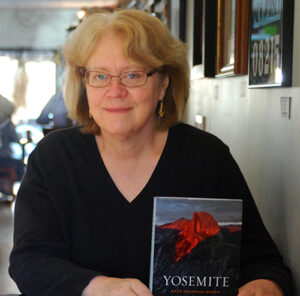
Professor, Stockton University Field of Study: Art History Member since: 2018 What does your work involve and how does it intersect with visual literacy? Because I teach art history, a lot of what I do is look at images and discuss them with students. We consider composition and the way artists have used the visual elements of art (line, color, shape, etc.) as well as biographical and cultural aspects of the art under consideration. How did you become interested in visual literacy? Back in 2012, colleagues at Stockton University invited me to present at the IVLA conference held at Stockton’s Seaview Hotel. In the last two years I’ve become active with the art exhibition committee. What are you currently working on (feel free to describe a typical day!)? I’m currently writing an essay for the 2022 IVLA conference and preparing for fall classes. On the backburner I have a book and website project “Art & Architecture of New Jersey” that I hope to return to. What does the term ‘visual literacy’ mean to you? Images are all around us these days. Visual literacy means learning to assess these images and their meaning critically. I’m less interested in formal definitions of the phrase, however, than in teaching my students to analyze and understand the visual arts. Select Publications Ogden, K.N. (2015). Yosemite, Reaktion Books, Ltd., London. Ogden, K.N. (2016). Painters & Painting. In The Encyclopedia of Greater Philadelphia (PhiladelphiaEncyclopedia.org). Ogden, K.N. (2016). The Peale Family of Painters. In The Encyclopedia of Greater Philadelphia (PhiladelphiaEncyclopedia.org). Ogden, K.N. (2012). Camera Lies Before Photoshop.TM In New Horizons in Visual Literacy: Selected Readings of the International Visual Literacy Association, 133-144. Ogden, K.N. (2006). California as Kingdom Come. In Yosemite: Art of an American Icon. Autry Museum of Western Heritage, Los Angeles, 23-53.

Kazuyo Kubo
Associate Professor of Sociology and Children, Youth, and Family Study, Lesley University / Sociology Member since 2017 My work examines the experiences of immigrant families, which involves investigating how educational space is designed to encourage inclusive learning. I was one of the Davis Grant Fellows at Lesley University. The fellows worked collaboratively on a visual literacy pedagogical project. I am currently working on developing a course on visual sociology. Visual literacy provides a possibility for an expanded analysis of the social world with its examination of what is seen, visually illustrated, photographed, and videotaped rather than more traditional depictions represented by text and numbers. To me, social observation of visual material uncovers social realities that are not necessarily captured by conventional empirical research. Find out more and connect with this member: Visit Kazuyo Kubo’s Lesley University Profile
Kristen Harrison
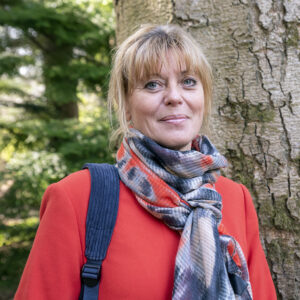
I was first introduced to visual literacy by an ESL/EFL teacher I was working with at the time. I was developing some ideas for children’s books that would encourage kids to develop “creative literacy” and she introduced me to the field of visual literacy. I had an immediate connection with the concept and was drawn especially to the diversity within the field.
Margaretha Häggström
PhD in Pedagogy, Lecturer in Visual Arts at Dalarna University, Sweden, and lecturer in Pedagogy at the University of Gothenburg. Field of Study: Pedagogy and Visual Art Member since: 2016 What does your work involve and how does it intersect with visual literacy? Most of my work relates to education, from primary school education to University education. My work also relates to: Aesthetic and multimodal perspectives on education Art-based environmental education Aesthetics, Visual art and sustainability Relational Pedagogy, multimodality and visual art How did you become interested in visual literacy? I became interested in visual literacy many years ago, when I was a preschool teacher. I then realised the importance of children’s right to express themselves in various ways, and thus the importance of explicit education directed towards visual competences. Then, I became a high school teacher in Visual Art and Swedish, and worked with students who had difficulties of various kind. I found that my students needed different ways to communicate, so I learnt more about multimodality, visual literacy and how to promote students’ ability to use visual resources to communicate. What are you currently working on (feel free to describe a typical day!)? As a researcher, I am currently working with a European project (ERAMSUS+), including relational pedagogy, multimodality and art in relation to Education for Sustainable Development. One example is from a primary school, where the staff has decided to remove all asphalt to make the schoolyard greener and more environmentally friendly. All pupils were invited to participate in planning the new school yard by making Lego models and paintings. Another example is from a school where all teachers work with the Storyline Approach, in which visuality plays a crucial role in the learning process. As a lecturer, I am involved in Visual Art Teacher Education, and in using photo, animations and documentary films in Student teachers’ learning processes as well as in preschool and high school. I am also teaching about multimodality in Language Education (Swedish), and how to use and understand images in relation to communication. As an artist/scholar, I have explored mirroring and portrait painting in several ways. I have published articles and books accordingly. What are you currently reading/writing/watching/listening to and/or curious about? I am reading and writing about relational pedagogy, learning processes and sustainability. I am curious about the connection between the teacher-student relationships and learning processes in general, and with regard to issues of sustainability in particular. I am also interested in how art creation can be a facilitator in learning processes and in students expressions about global warming, climate change and other difficult issues the encounter. I addition, I am interested in identity formation and visual representations. What does the term ‘visual literacy’ mean to you? I consider visual literacy is a social practice, which entails three interrelated dimensions: a cultural, an operational, and a critical. I have in a few articles elaborated on the term visual literacy, and I have used the four resources model by Allan Luke and Peter Freebody, which is a framework for literacy education, focusing on reading and writing. In my redesign of this model, visual elements and activities replace text, as a way to mark a shift from the linguistic to the pictorial. Visual literacy encompasses here four abilities based on four visual practices. In short: Visual code-breaking – how are images constructed a what kind of codes does the image contain? Visual code-breaking implies knowledge of images’ elements, such as color, shape, space, size, and the inter-relation between light and shadow, proximity and distance, perspective, and composition. Visual meaning-making – how can this image be understood, what does it mean, and how can it be interpreted? Visual meaning-making is constructed through prior knowledge, life experiences, and specific topic know-ledge along with understanding of how images are composed. Visual use – what is the intention and role of this image and how can I use it? Visual use depends on knowledge of social-cultural pictorial aspects. Visual analysis – How does this image affect the viewer? What is included or excluded, and why? How does this image relate to other images? Visual analysis builds on knowledge of image-creators’ awareness and choice of image language. Find out more about Margaretha Häggström: https://www.gu.se/om-universitetet/hitta-person/margaretahaggstrom Publications Häggström, M. (2022). This is me! Visual art as means to identify self and the “bigger picture”. In G. Coutts, T. Eça, Y. Hung, S. Kim, L. Wang, G. Pataky & J. Silverman (red.) Learning Through Art: International Pictures of Practice. (370-377). InSEA Publications. Häggström, M., Wallin, M., & Gavelin, C. (2021). Who Are You And Who Am I? An Autoethnographic Study on How Mirror Neurons Guide the Artwork in a Collaborating Art Project. International Journal of Arts Humanities and Social Sciences Studies, 6(7), 1-10. http://www.ijahss.com/Paper/06072021/1179451448.pdf Häggström, M. & Dahlbäck, K. (2020). Transformative Learning and Identity Building through Aesthetic Experiences in a Storyline. I I Høeg Karlsen & M. Häggström (red.), Teaching through stories. Renewing the Scottish Storyline Approach in Teacher and Higher Education. (59-79). Waxmann. https://doi.org/10.25656/01:21352 Häggström, M. (2020). The Art of Read-Aloud, Body Language and Identity Creation. A Multimodal Interactional Analysis of Interaction between Parent, Child and Picture Book. Journal of Language Studies, 14(1), 117-140. https://drive.google.com/file/d/15TTFFFgMjz5SZIndMa1OMT_a3O2TIUJV/view Häggström, M. (2020). Embodied connective aesthetics: A collaborative art project guided by mirroring. In D. M. Baylen (Ed.), Crossing boundaries and disciplines: The book of selected readings 2019 (s. 82-96). International Visual Literacy Association. ISBN: 978-0-945829-13-3

Michelle Wendt
Instructional Technologist and Adjunct Faculty at Stockton University / K-12 education Member since 2017 Past President of the IVLA. My work involves pushing into K-12 classrooms as a Technology Integration Specialist working directly with teachers and students. My intersection with Visual Literacy is to inform teachers that it is a “Thing” and help them use visuals effectively and thoughtfully in instruction and assessment, including performance-based assessments. Initially, we had a question come up in my graduate class about the use of visuals in assessments; I had some strong opinions, and my graduate professor asked me to participate in the 2012 IVLA conference. Currently, I am planning some SRI&ETTC conferences/workshops for K-12 teachers, where I make every possible link to visual literacy possible in order to highlight the field. I teach an undergrad course each fall named Data Visualizations and Narratives. Each semester as I evaluate their submissions, I am curious why my students, faced with multiple choices for visual representation, are more likely to design infographics using traditional charts rather than try more creative interventions. I believe visual literacy is the critical evaluation of visuals, as we perceive, use, and create them. I am delighted to be acquainted with the scholarly and artistic IVLA members who inform my further exploration of Visual Literacy. Publications: Using Visuals to Deepen Learning in Assessments publication date Jun 1, 2012 International Visual Literacy Association Selected Readings 2012 Find out more and connect with this member: Google Scholar Profile

Rhonda Robinson
Distinguished Teaching Professor, emeritus, Educational Technology, Research, and Assessment, Northern Illinois University Field of Study: Educational Communications and Media Member since: 1982 What does your work involve and how does it intersect with visual literacy? As a professor, I taught courses in visual literacy, media design and production, research methods and advised and directed dissertations. I also gave workshops in these topics to teachers, museum educators, and instructional designers. How did you become interested in visual literacy? I always loved movies and learned photography early in my childhood. Teaching middle schoolers I developed curricular activities in film and video production and analysis which were very successful. Seeking a master’s degree (and continuing through the PhD) in media, I worked with Ann DeVaney, PhD, at Univ. of Wisconsin, who encouraged critical analysis of visual communications and introduced me and my fellow students to IVLA. Several of us became active members; along with me, Marina McIsaac, Robert Muffaletto, and David Considine among others all served in Board and Officer positions and hosted conferences. What are you currently working on? As an IVLA Board member, I have helped plan and organize the conferences in San Francisco and Chicago along with other Board responsibilities. My most recent VL involvement has been with several smaller museums in Chicago, helping CPS teachers learn to integrate visual literacy activities and CCSS into their existing practices. As a new experience, I recorded an NIU STEAM Podcast along with illustrator Tom Lichtenheld discussing the importance of visuals for learning. What are you currently reading/writing/watching/listening to and/or curious about? I read contemporary fiction with two book groups, and love listening to Carrie Newcomer and other singer songwriters, along with interesting podcasts on current issues. I am concerned about overuse of digital tools, personal privacy on social media, and the next generation’s development in communication and critical analysis of mediated messages. What does the term ‘visual literacy’ mean to you? Visual literacy is the learned ability to see, analyze, understand, and create meaningful communication in any visual medium. Anything else you’d like to share? Active membership in IVLA for over 30 (!) years has given me so many irreplaceable opportunities for learning, for professional development, for exciting travel to international locales, for collaborative projects, and for friendships.

Tabitha Dell’Angelo
Tabitha Dell’Angelo Field of Study: Urban Education Member since: 2021 How did you become interested in visual literacy? What do your work involve and how does it intersect with visual literacy? I started out in arts based research more generally. Over the years I began to be very interested in comics and photography as ways to interpret the contexts in which I am interested. I am also working on including more visual literacy strategies in my teaching in order to enhance learning for all of my students. What are you currently reading/writing/watching/listening to/ and/or curious about? t the moment I am immersed in children’s literature as I plan to teach a new class. I recently read a new YA novel called Lobizona that tackles important social issues and includes werewolves! I am also getting ready to stage a play that was sidelined because of COVID almost two years ago. I love television and believe we are living in a time of really great TV. Everything from comedies like Black AF to dramas like Succession are challenging our notions of the world. I have also been revisiting the work of Philadelphia native Zoe Strauss. She is a brilliant photographer who was born in the same month and year as me and raised nearby. I feel connected to her and her work even though we have never met. What does the term ‘visual literacy’ mean to you? What does the term ‘visual literacy’ mean to you? This is somewhat difficult because I feel like every field is their own little subculture with specific ways of knowing. I have always been someone who needs to visualize ideas. My notebooks are filled with charts and blocks and arrows. I need visuals to process information. But, more broadly, I see “visual literacy” as using visuals as both ways of communicating, processing, and understanding the world. If literacy is reading, writing, speaking and listening — I think “visual literacy” is the recognition that text is more than words — that we can read, write, speak and listen through visual mediums. Website address: www.tabithadellangelo.com

Xiaoning Chen
Assistant Professor, National College of Education, National Louis University Field of Study: Language and Literacy Education Member since: 2016 What do your work involve and how does it intersect with visual literacy? My work involves providing professional development for mostly in-serve teachers on supporting and enhancing the academic success of culturally and linguistically diverse students. Language learning is inseparable from visual literacy as learners need make constant connections between abstract symbols and perceptual experiences and use visuals to think. Further, visual is a powerful tool that supports diverse learners’ access to content and helps them create semitonically rich narratives. How did you become interested in visual literacy? I became interested in visual literacy while taking a graduate course with Dr. Susan Britsch at Purdue University. This course has initiated my interested in understanding how social semiotics work and how multiple modes play a role in presenting possibilities and challenges in learners’ abilities to navigate the multi-modal world. What are you currently working on (feel free to describe a typical day)? I’m currently working with my colleagues on a grant proposal aiming to develop a visual literacy curriculum for all learners in social studies using the digitized primary sources from the Library of Congress. What are you currently reading/writing/watching/listening to/ and/or curious about? I’m interested in learning more about exploring how learners make sense of visuals empowered by digital tools (e.g., 3-D models, interactive maps from different perspectives, and videos). What does the term ‘visual literacy’ mean to you? Visual literacy, to me, means a set of skills to read, make sense, and analyze visuals, as well as make connections to and create meaning using multiple modes of representations. Select publications: Chen, X. N., Newman, M., & Dipinto, V. (2018). Teachers’ visual literacy practices in middle and high school science classrooms. In D. M. Baylen (Ed.), Senses and experiences: The book of selected readings (pp. 70-84). Carrollton, GA: International Visual Literacy Association. Chen, X. N. (2017). A comparative study of visual representations in conventional, digitized, and interactive high school science textbooks. Journal of Visual Literacy, 36(2), 104-122. http://dx.doi.org/10.1080/1051144X.2017.1386388 Chen, X. N. (2016). From print to digital picture books: The impact of technology on multimodal design. Visual Literacy Today, Selected Readings 2014-2015 from International Visual Literacy Conferences. Retrieved from http://visualliteracytoday.org/from-print-to-digital-picture-books-the-impact-of-technology-on-multimodal-design-by-xiaoning-chen/ Huang, Q. Y. & Chen, X. N. (2015). Examining text quality of English/Chinese bilingual children’s picture books. International Journal of Bilingual Education and Bilingualism, DOI: 10.1080/13670050.2015.1011076 Huang, Q. Y. & Chen, X. N. (2015). Examining the overall quality of English/Chinese bilingual children’s picture books: Issues and possibilities. The Reading Matrix, 15(1), 133-142. Find out more and connect with this member: NLU Faculty Profile