Narrative Approaches within Arts-based Environmental Education:
Theoretical and Practical Applications for Alternative Futures
Margaretha Häggström - 2026 -
Theoretical chapters inform a discussion of empirical studies carried out in Sweden, Finland, and Slovenia, applying concepts such as relational pedagogy and phenomenology to real-world settings. Chapters further explore various art forms such as land art and drama in the context of the storyline approach, creating narratives on resilience and sustainability, addressing climate anxiety, and fostering critical and imaginative thinking among students. Theoretical and empirical insights combined with indigenous perspectives lead to practical strategies for implementing AEE in various educational contexts, providing concrete examples of how AEE can be integrated into classroom settings, outdoor education, and community programmes. Emphasis is also given to the importance of connecting these practices to broader global initiatives such as the 2030 Agenda for Sustainable Development in the cultivation of a sustainable, liveable future. At the heart of the book is a Manifesto for Regenerative Education – a poetic and powerful framework for rethinking learning in the Anthropocene.
Creative Formats Across Media and Disciplines: Assignments Beyond the Essay
Sarah Huber - 2026 -
Creative Formats Across Media and Disciplines guides instructors and students to examine how different formats shape meaning. Grounded in art and design practices while recognizing how disciplines from STEM to the humanities use formats to structure information, it bridges the divide between fields where format diversity is readily embraced and those where form and content remain separate concerns. Through concrete examples—video narratives, choreographed dance, quilted data visualizations—it illustrates possibilities for communication in varied contexts.
In the contemporary digital media landscape, still and moving images, interactive visualizations and virtual reality are increasingly important to attract attention, cultivate engagement, inform and influence opinions, and provide a more emotive and immediate viewing experience for news audiences. This Companion draws together leading voices from academia and industry to survey this dynamic and ubiquitous mode and inspire dialogue. Along with an introduction and conclusion, the volume is structured in five sections and covers people and identities; practices and processes; technologies, equipment, and forms; theories, concepts, and values; and audience interpretation and impact.
A Slow Approach to Visual Literacy in Higher Education
Dana Thompson and Stephanie Beene - 2024 -
The principles of “slow librarianship”—which prioritizes reflection, collaboration, solidarity, and valuing all kinds of contributions—can also support deeper and more sustained learning and understanding. This book emphasizes the importance of attention and focus to the process of visual literacy, demonstrating how this approach supports ACRL’s Visual Literacy Competency Standards for Higher Education and the Framework for Visual Literacy in Higher Education.
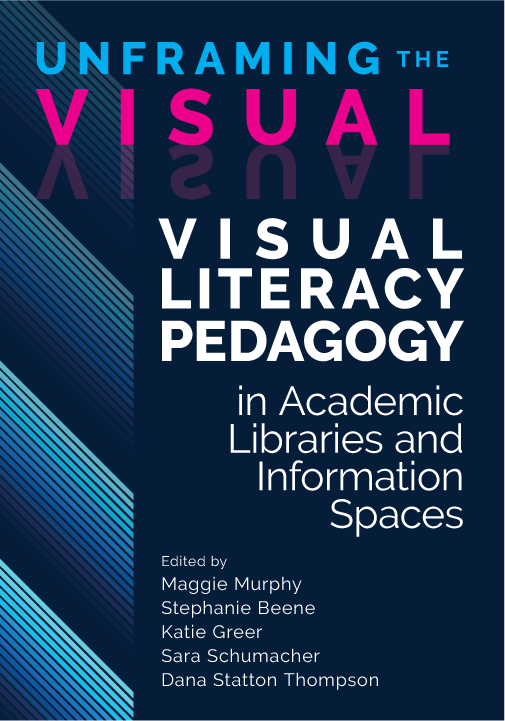
Unframing the Visual: Visual Literacy Pedagogy in Academic Libraries and Information Spaces
Maggie Murphy, Stephanie Beene, Katie Greer, Dana Thompson, Sara Schumacher - 2024 -
Visual literacy is an interconnected set of practices, habits, and values for participating in visual culture that can be developed through critical, ethical, reflective, and creative engagement with visual media. Approaches to teaching visual literacy in higher education must include a focus on context and not just content, process and not just product, impact and not just intent. Unframing is an approach to visual literacy pedagogy that acknowledges that visuals are a pervasive part of everyday life, as well as embedded into every scholarly discipline.
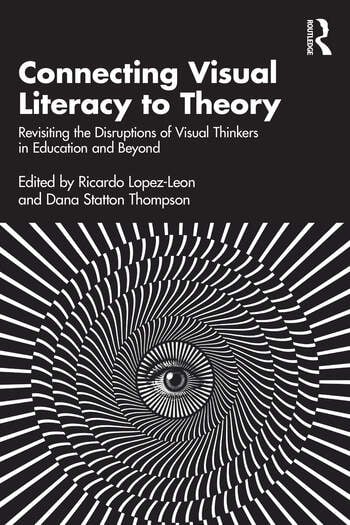
Connecting Visual Literacy to Theory: Revisiting the Disruptions of Visual Thinkers in Education and Beyond
Ricardo Lopez-Leon and Dana Thompson - 2024 -
Through an exploration of the contributions of well- and lesser-known visual thinkers from across disciplines and geographies, the contributors offer contemporary appraisals and modern re-conceptualizations of the subject. The book illuminates how experts from various disciplines ranging from art, communication, education, and philosophy laid the foundations for what we know today as visual literacy. These foundations and innovative ways of thinking and understanding images have been disruptive, but until now, have been relatively understudied. As such, the chapters examine the context of individual thinkers, expanding upon famous theories and providing new insight into why these visual and cognitive processes are imperative to learning and education and to disciplines spanning art history, museum studies, philosophy, photography, and more.
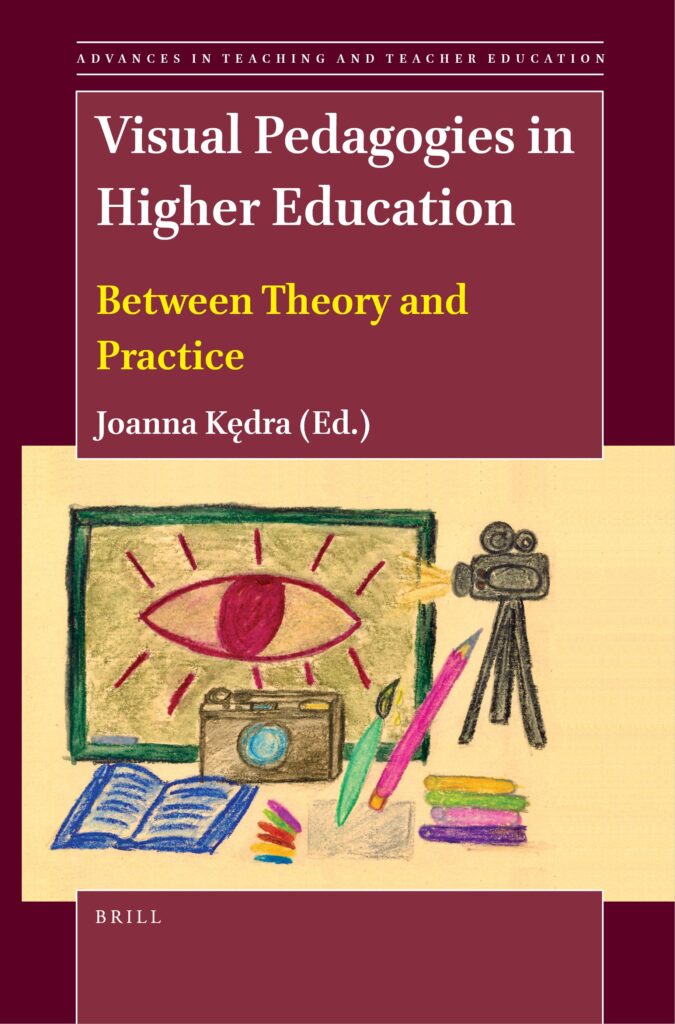
Visual Pedagogies in Higher Education: Between Theory and Practice
Joanna Kędra - 2023 -
The use of images in education is expanding, but clear and comprehensive guidelines on how to carry out visual activities with students of a variety of fields are difficult to find. With the case studies from Finland, Canada, the United Kingdom, Australia, Japan, Poland, Turkey and the United States, contributors to this volume offer detailed reflections on the pedagogical role of using images in higher education. Examples include drawing, collage making, video production, object-based learning, photography projects, and many more. The book constructs a solid argument for the further development of visual pedagogies in higher education, highlighting the need to support students in advancing their visual competency as it has become fundamental to command in everyday life and professional contexts.
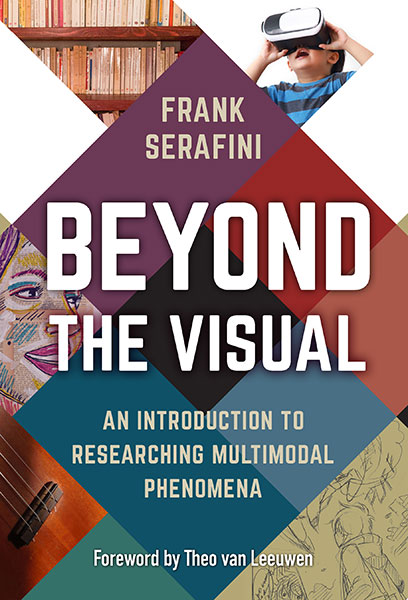
Beyond the Visual: An Introduction to Researching Multimodal Phenomena
Frank Serafini - 2022 -
Beyond the Visual is a survey of contemporary approaches to researching a wide range of visual and multimodal phenomena. Building on his earlier book, Reading the Visual, Serafini shares resources for conducting multimodal research across the social sciences. Beginning with a comprehensive overview of the theoretical foundations that support the analytical frameworks, the text is organized into two parts—texts and objects, events and spaces—with corresponding analytical approaches. Examples and outlines are provided to help novice and experienced researchers conduct their own studies. Vignettes by some of the most renowned scholars in the field of multimodality research take the reader behind the scenes of various projects to experience the thoughts and decisions that go into conceptualizing and applying the analytical frameworks presented in the book.
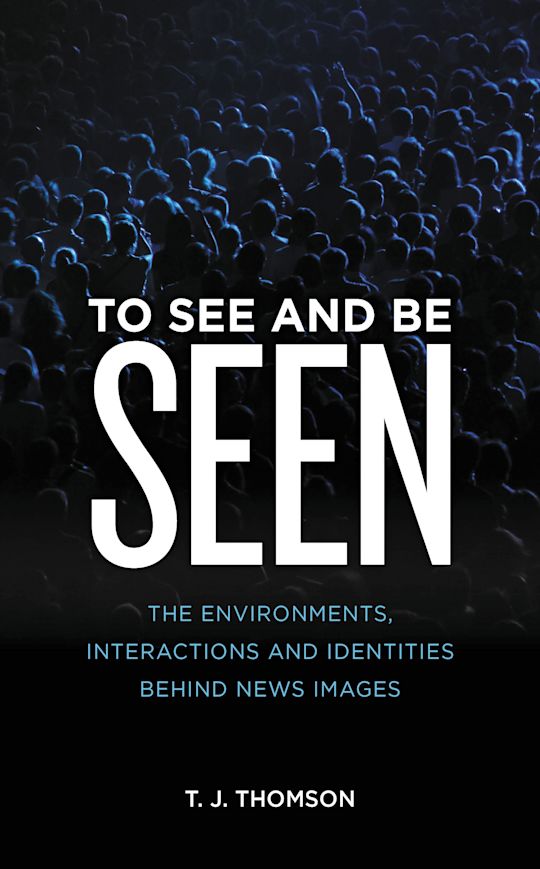
To See and Be Seen: The Environments, Interactions and Identities Behind News Images
T.J. Thomson - 2022 -
Whether inscribed in physical media, projected on surfaces, or viewed on digital devices, we find ourselves constantly inundated with streams of visual data. Yet, we know surprisingly little about how these images are made, especially in journalistic contexts where representations are long-lasting and where repercussions can be dramatic.
To See and Be Seen considers some of the ideological, aesthetic, pragmatic, institutional, cultural, commercial, environmental, and psychological forces that consciously or otherwise shape the production of news images and subsequently influence their reception. T. J. Thomson examines the expectations, experiences, and reactions of those depicted by visual journalists and considers other relevant factors: how do everyday people perceive cameras and those who operate them? How are identities visually represented and presented to different audiences? And how does the physical and the socially constructed environment shape those depictions?
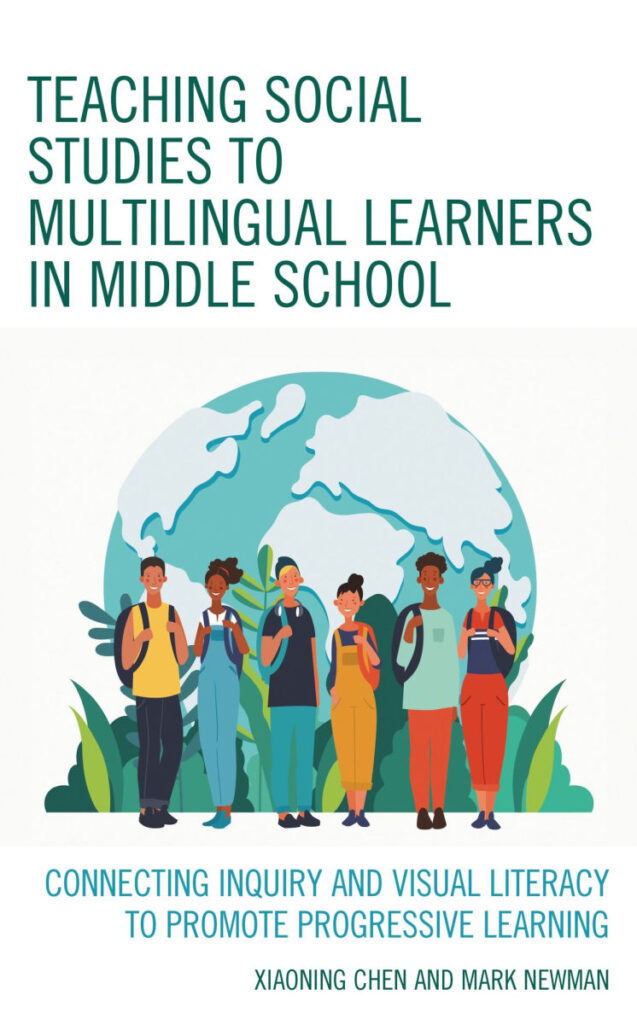
Teaching Social Studies to Multilingual Learners in Middle School:
Connecting Inquiry and Visual Literacy to Promote Progressive Learning
Xiaoning Chen, Mark Newman - 2021 -
Teaching Social Studies to Multilingual Learners in Middle School: Connecting Inquiry and Visual Literacy to Promote Progressive Learning explores effective strategies for teaching social studies to multilingual learners. The centerpiece is a visual literacy framework that integrates inquiry, primary source analysis, and visual literacy to provide a progressive learning sequence to meet the varied needs of learners. The visual literacy framework brings together related aspects of progressive, sequential learning into a cohesive, coherent whole. It has an adaptable structure that allows teachers to customize learning activities to meet individual student needs. The progressive learning sequence has varied modes of learning that help teachers move students from basic to proficient to advanced levels of support.
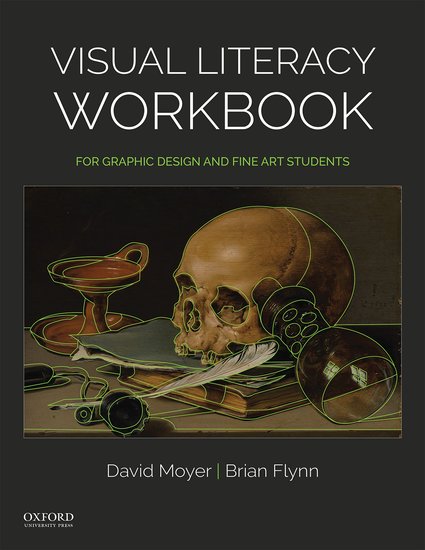
Visual Literacy Workbook: For Graphic Design and Fine Arts Students
Brian Flynn and David Moyer - 2019 -
Appropriate for both graphic designers and fine artists, Visual Literacy Workbook: For Graphic Design and Fine Art Students provides a detailed approach to understanding visual imagery. The text presents a wide range of fine art, graphic, and digital examples and is divided into two major parts: visual form and visual content. As students cover new material in the workbook, concepts are reinforced and synthesized, resulting in a comprehensive understanding of form and content. Upon completion of the text, students are well-prepared to participate in the design process and further interpret visual content.
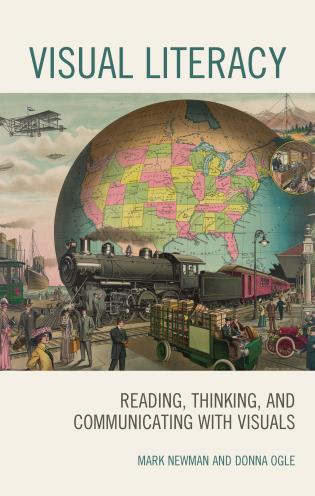
Visual Literacy: Reading, Thinking, and Communicating with Visuals
Mark Newman and Donna Ogle - 2019 -
Visual Literacy examines how teachers can use visuals to improve learning for all students. It provides teachers with a foundation in visual literacy, defined as the ability to read, think, and communicate with visually presented information. Results of studies of students’ using visual information indicate that most students are clearly lacking in the tools needed to use visuals effectively. The book orients teachers to visual literacy and the world of visuals. It discusses various classroom tested strategies and activities for all students, including second language learners, and students with special needs. Stressing visual literacy skills helps students understand a visual more deeply so they can master the content they are learning.
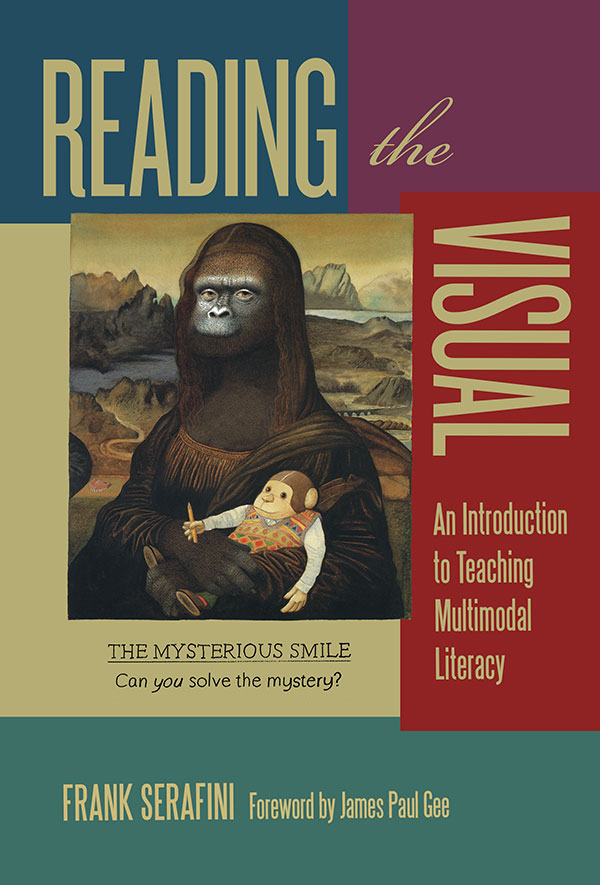
Reading the Visual: An Introduction to Teaching Multimodal Literacy
Frank Serafini - 2013 -
Today’s teachers need up-to-the-minute information to help their students make sense of the multimodal texts they encounter daily in and out of school. Reading the Visual is an essential introduction that focuses on what teachers should know about multimodal literacy and how to teach it. This engaging book provides theoretical, curricular, and pedagogical frameworks for teaching a wide-range of visual and multimodal texts, including historical fiction, picture books, advertisements, websites, comics, graphic novels, news reports, and film.
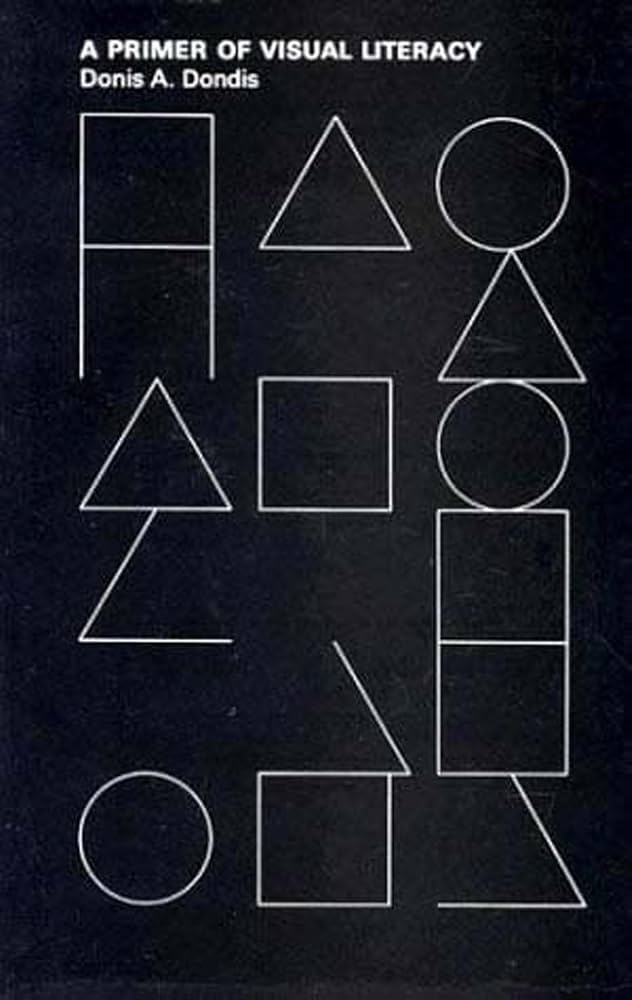
Understanding through seeing only seems to be an obviously intuitive process. Actually, developing the visual sense is something like learning a language, with its own special alphabet, lexicon, and syntax. People find it necessary to be verbally literate whether they are “writers”: or not; they should find it equally necessary to be visually literate, “artists” or not. This primer is designed to teach students the interconnected arts of visual communication. The subject is presented, not as a foreign language, but as a native one that the student “knows” but cannot yet “read.” The analogy provides a useful teaching method, in part because it is not overworked or too rigorously applied.
An illustrated introductory primer is designed to familiarize educators with the concept of visual literacy and classroom practices which help teach it. Visual literacy is defined, its objectives are explained, and the use of pictures and cameras in literacy programs is explored.