2014-2015 The Art of Seeing

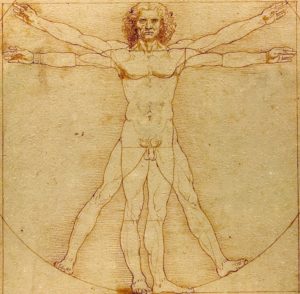
vetruvian man and visual literacy
2014-2015 The Art of Seeing

The Role of Visual Literacy in the Birth of Observational Science

Deborah Curtiss Abstract: De Humani Corporis Fabrica, a seven-volume opus by Andreas Vesalius, published in 1543, is possibly the most elegant synthesis of science and visual art in the history of humankind. Today, the frontiers of discovery in the 21st century reside in the minutiae of the human brain and the magnitude of the cosmos. Similarly, vision and visual literacy played an essential and inestimable role in the development and revelations of observational science in the Renaissance when some inquisitive individuals of the 1500s, notably Leonardo and Vesalius, delved into the constructs of human and animal anatomy. And others—such as Copernicus, Tycho Brahe, and Galileo—looked to the heavens to reveal its mysteries. A brief history of these developments is followed by a creative exposition of their influences upon me as a visual artist. Read the full paper here.
Read More »
2014-2015 The Art of Seeing

Visual Poetics in New Media Design

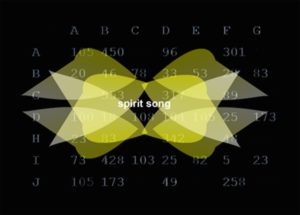
Professor Patricia Search   Abstract: Visual poetics in new media design is a dynamic form of communication that integrates diverse media into poetic statements that form a new type of hybrid literacy. Early examples of visual poetics include petroglyphs and other forms of pictorial writing, as well as the pattern poems of Greek poets and Apollinaire. However, contemporary visual poetics now includes works of art and design that are three-dimensional, multimedia, and interactive. This paper includes an historical overview of visual poetry and contemporary new media poetics. The paper also includes an analysis of the complex syntax of this new literacy which includes multimodal semiotics, kinesthetic design, and interactive aesthetics. Examples of art and design ranging from indigenous to contemporary works are included to illustrate these concepts. Understanding the semiotic structure of this complex form of visual literacy will help researchers, educators, artists, designers, and other professional communicators define new ways to use these hybrid designs. Keywords: interactive aesthetics, kinesthetic design, multimodal semiotics, visual poetry Read the full paper here.

Read More »
2014-2015 The Art of Seeing

Learning to Look Across Disciplines: Visual Literacy for Museum Audiences

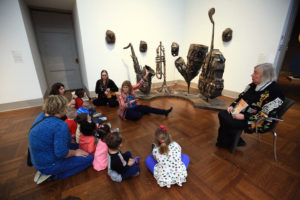
Kate Blake   Abstract: Since 2011, teaching visual literacy has been one of the strategic objectives of the Toledo Museum of Art (TMA), site of the 2014 International Visual Literacy Conference. In an effort to realize this objective, the museum established an institutional definition and framework for Visual literacy, created a twelve-hour introductory curriculum, and implemented it across the museum. This paper will give an overview of the visual literacy definition and framework employed by TMA, describe the pedagogical approach utilized by TMA educators and docents, and examine implementation of the curriculum through case studies of four of the museums core audiences: schools and teachers; general museum visitors; private sector partners; and museum staff, docents and volunteers. The case studies examined will focus on adaptation strategies employed to meet the unique needs of these distinct audiences. The article will also address ongoing evaluation efforts. Keywords: curriculum development, visual literacy framework, pedagogy, museum audiences, Visual Language Read the full paper here.  

Read More »
2014-2015 The Art of Seeing

Welcome to the IVLA Book of Selected Readings 2014-15

Contents The Art of Seeing 1. The Role of Visual Literacy in the Birth of Observational Science Deborah Curtiss 2. Visual Poetics in New Media Design Professor Patricia Search 3. Learning to Look Across Disciplines: Visual Literacy for Museum Audiences Kate Blake 4. Whose Streets? Our Streets! Art Integration from Museum to Barrio Rhonda Robinson 5. From Print to Digital Picture Books: The Impact of Technology on Multimodal Design Xiaoning Chen 6. Graph Construction and Interpretation Ability Frank A. Cerrato, Jung Lee & Wondi Geremew 7. Integrating Visual Literacy Skills into PK-12 Education Teresa Farrell 8. Proposal for Research Presentation Poster Design Workshop by Junichi Endo 9. The Dialogical Model for Reading Contemporary Art Rachel Shalita Hamidrasha 10. Visually Documenting Consumer Health Research Using PhotoVoice Naomi Jeffery & Rebecca L. Pearson

Read More »
2014-2015 The Art of Seeing

Whose Streets? Our Streets! Art Integration from Museum to Barrio

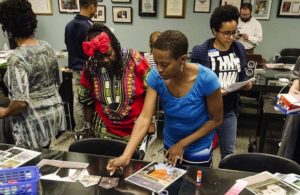
Rhonda Robinson   Abstract: Educators from four museums collaborated with artists, scholars, educators, and activists to craft socially engaged teacher Professional Development. Activities and resources encouraged the integration of history, culture, and identity through art into the classroom experiences of Chicago students. Museum Educators introduced a variety of visual literacy and critical viewing frameworks, shared a wide variety of artworks and community art projects, provided links to curricular redesign, and explored active engagement of teachers in this themed learning experience. Teachers engaged in arts creation and analysis created a sense of community for themselves and their students, and developed skills in arts integration into their classroom activities. In addition, teachers felt empowered to introduce social justice issues around the idea of space and community and integrated these into classroom projects with their students. Keywords: arts integration, social/spatial justice, intersectionality critique exchange, visual literacy, professional development Read the full paper here.  

Read More »
2014-2015 The Art of Seeing

From Print to Digital Picture Books: The Impact of Technology on Multimodal Design

Xiaoning Chen   Abstract: From the socio-semiotic perspective, this paper intends to examine the impact of technology on multimodal design of digital picture books. The study analyzes 26 digital picture books completed by pre-service teachers in a Literacy Methods course, and identifies three key categories, which are static multimodal semiotic resources, dynamic multimodal semiotic resources, and usability features, that reshape the elements of written language, visual image, design, and the overall reading experience of digital books. This study has research and pedagogical implications. The results of the study contribute to the limited understanding of how digital texts emerge as a new form of visual literacy and how technology has a significant impact on the multimodal design and meaning making process. The study also appeals to educators as it has a close connection to the Common Core State Standards (2011), which places a strong emphasis on students’ abilities to recognize, interpret, and evaluate the information represented through diverse media and formats. Effective literacy strategies to support children’s interpretations of multimodal digital texts are discussed to support the construction of a dynamic and active reader’s role in navigating “new textual landscapes” (Carrington, 2005). Read the full paper here.

Read More »
2014-2015 The Art of Seeing

Graph Construction and Interpretation Ability

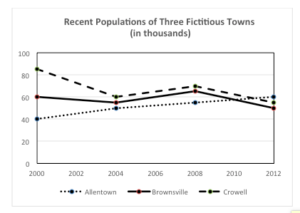
Frank A. Cerreto, Jung Lee, and Wondi Geremew   Abstract: The purpose of this study was to investigate what, if any relationship exists between graph construction ability and interpretation ability. Sixty-seven college students completed two graphing tasks, one involving construction and the other interpretation of graphs, both based on actual data. Statistical analysis of the scores showed no significant correlation between total scores on the two tasks and no significant relationships between specific components of graph construction ability and graph interpretation ability. These results suggest that the two abilities are distinct from one another. The study’s findings add to our understanding of graph construction ability and have practical implications for teaching and learning. Keywords: graph construction, graph interpretation, graphing data, graphical literacy Read the full paper here.

Read More »
2014-2015 The Art of Seeing

Integrating Visual Literacy Skills into PK-12 Education

Teresa Farrell Abstract: First person encounters with educational issues can often lead to reform, and Eastern Oregon University assistant professor, Teresa A. Farrell describes how her personal experience with Visual Literacy is the driving force behind her ongoing action research in the field. As a faculty member in a graduate level teacher preparation program, she has an opportunity to study various methodologies in order to better determine how to promote and increase Visual Literacy skills. A particular focus is on Visual Literacy and its relevancy to PK-12 education in regard to critical thinking, the Common Core State Standards (CCSS), and communication. In this paper, primary research in practice and measurement is shown as a basis for teacher preparation and professional development. The paper includes specific suggestions for PK-12 activities aligned with CCSS. Read the full paper here.

Read More »
2014-2015 The Art of Seeing

Proposal for Research Presentation Poster Design Workshop

Junichi Endo Abstract: Since 2009, we have been teaching graduate students the design basics needed to create research presentation materials such as slides and posters. The course aims to provide students with the ability to create posters for presentations at academic conferences. We focused on research materials because the need to make research presentations at academic conferences increases as Japanese students reach the graduate level. Clarity and visibility are more important than the visual impact when designing research materials. For business presentations and advertising, there is a need for high-quality visually stimulating slides, such as large photos, flashy illustrations, and animation. However, academic materials require clear design and easy-to-read content. We proposed an additional workshop in which students could acquire poster design skills. In this workshop, students were able to get feedback on how others saw their own layouts from a “third person perspective” and learnt how to achieve the sense of balance necessary for effective poster design. It became apparent that the students needed to more thoroughly understand the concepts of design and not just learn a set of rules. The workshop had very positive effects on subsequent poster designs. The students were able to identify the incomprehensible aspects of their own poster design in the workshop. This understanding has enabled them to work independently and improve their own poster designs when preparing their own research posters. Keywords: design, workshop, research poster, higher education Read the full paper here.

Read More »
2014-2015 The Art of Seeing

The Dialogical Model for Reading Contemporary Art

Rachel Shalita Hamidrasha Art and Education Faculty, Beit-Berl College, Israel Abstract: The “Dialogical Model” for reading contemporary art has many antecedents. It can be found in the thought and writings of Plato who, in 5th B.C.E. Athens, described the centrality of the dialogical form as “Socratic dialogue,” employed as an educational tool by his teacher Socrates. Centuries later, Martin Buber’s canonical book I and Thou (1923), enormously influenced pedagogical worth of dialogue, and Carl Rogers in his best known contribution to humanistic psychology and the facilitation of learning, speaks of congruence, acceptance and empathy — three main tenets for dialogue. Read the full paper here.

Read More »