2019-2020 Crossing Boundaries and Disciplines

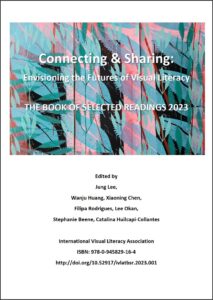
Welcome to the Book of Selected Readings 2019-2020 (ed. Danilo M. Baylen)

Table of Contents  Looking Back and Moving Forward                                                                                        2 Danilo M. Baylen, Editor-in-Chief  Editorial Team for Volume 2019                                                                                                 5 List of Authors                                                                                                                              6 List of Reviewers                                                                                                                          7 Crossing Boundaries   Social-emotional Intelligence and Picture Books: Visual Modality as a Challenging Stimulus for Discussion with Preschoolers                                                                                                            9 Katerina Dermata, Panteion University of Social and Political Sciences, Greece Development of Spatial Skills through the Moholy-Nagy Visual Modules: A Longitudinal Study Andrea Kárpáti, Constantine the Philosopher University in Nitra, Slovak Republic Bernadett Babály, Óbuda University, Hungary  Preservice Teacchers’ Perspective of Photovoice and Visual Literacy Experiences            44 Abigail Winard, Sam Houston State University, USA Lory E. Haas, Sam Houston State University, USA Slimane Aboulkacem, Sam Houston State University, USA Sketchnoting: A Visual Literacy Methodology                                                                         61 Verena Paepcke-Hjeltness, Iowa State University, USA Teddy Lu, Veo, USA Crossing Disciplines     Embodied Connective Aesthetics: A Collaborative Art Project Guided by Mirroring     82 Margaretha Häggström, University of Gothenburg, Sweden    Measuring the Visual in the Museum: Social Meaning Mapping as a Means of Capturing More than Meets the Eye                                                                                                                               97 Dimitra Christidou, Norwegian University of Science and Technology, Norway   Visual Literacy in Architecture Education                                                                             115 Matthew Dudzik, University of Canterbury, New Zealand Notes                                                                                                                                            127                                                                                                                                                

Read More »

Measuring the Visual in the Museum: Social Meaning Mapping as a Means of Capturing More than Meets the Eye

Measuring the Visual in the Museum: Social Meaning Mapping as a Means of Capturing More than Meets the Eye Dimitra Christidou Norwegian University of Science and Technology, Norway Abstract. The duration of visitors’ visual engagement with the museum collection has been treated as a proxy for their visual literacy. Researchers draw upon different methods to measure this engagement, including eye-tracking and timing and tracking studies. This chapter presents Visitracker, a tablet-app designed to be used in timing and tracking studies, and Social Meaning Mapping (SMM), a digital tool embedded in the Visitracker app, designed to be used post-visit by the visitors. For SMM, visitors are invited to recount their experience verbally while marking it on a digital copy of the room’s floor plan projected on the tablet. Visitors’ audiovisual annotations are recorded by the app and can be accessed later through the Visitracker portal. This chapter argues for the value of coupling timing and tracking with SMM in approaching the museum experience as an embodied and multimodal event, unfolding in specific time and space. Examples from two studies highlight SMM’s contribution to a multimodal understanding of visual literacy in which vision is one of the multiple modes enacted. Keywords: Informal learning, museum experience, multimodal, sociocultural, visitor studies Read full text here.  

Read More »

Visual Literacy in Architecture Education

Visual Literacy in Architecture Education Matthew Dudzik University of Canterbury, New Zealand Abstract. Visual literacy aids architecture and design students in decoding embedded meaning in our built environment, helping them address a myriad of issues from construction to cultural resonance. As a creative field, this built visual lexicon creates a foundation from which to vet project-specific issues, allowing students to reinterpret visual data in the process of creation. Colin McGinn (2004), in his book Mindsight posits that the phenomenon of envisioning new realities from the internal manipulation of previous visual experience is cognitive imagination. The question becomes how students can be taught to see in such a way that they intuitively look beyond visual composition to analyze what forces socially, environmentally, economically, politically, and culturally drove the design. As global practice has simply become design practice, architects and designers must find ways to address culture and bring a voice to those who are marginalized in our built environment. Architecture responds to the needs of the people, and as designers increasingly practice in cultures other than their own, they need to find ways to connect with disparate groups deeply. Traditional research methods play an essential role in this process, but as architecture is experientially understood, the study of visual literacy can unlock the three-dimensional manifestation of the inherent complex social and cultural data locked within architecture. Like the cyclical design process itself, this method of inquiry and analysis moves from one method (visual or traditional) and back again building in refinement as each cycle adds another layer of information. Yet to propel the field forward and especially to address marginalized voices this process must also allow for the translation of this information and the creation of new realities. This chapter investigates design education by studying the use of cultural coding and cognitive imagination in architecture education. Keywords: Architecture education, culture, design process, imagination, visual literacy Read full text here.

Read More »

Embodied Connective Aesthetics: A Collaborative Art Project Guided by Mirroring

Embodied Connective Aesthetics: A Collaborative Art Project Guided by Mirroring Margaretha Häggström University of Gothenburg, Sweden Abstract. Identity formation is a lifelong process, which defines individuals to others and themselves. When humans develop their social self, they depend on other people’s views and values, as well as on imitating. Imitating is an indication of social behavior, which includes mirroring. In this qualitative study, the author examined a collaborative art project conducted through art-based and autoethnographic research by three scholars/art teachers, the author included. The study started from a life-world phenomenological perspective and the concepts of lived experience, wonderment and intersubjectivity. In addition, a four resources model of visual literacy was used to analyze the result. The study was implemented in the context of teacher education, and art was regarded as the principal content as well as a didactic tool, accentuating the communicative feature of visual literacy. The result shows the complexity of conducting a collaborative art project, and that the visual expressions was not restricted to artwork but incorporated body language. Mirroring included not only visible signs but also audio signs and signals, and occurred even though the scholars/art teachers were quite immersed in and preoccupied with the art-making. One does not need to visually observe another person when mirroring, but can experience another person’s performance by merely being in the moment. Keywords: Art-based research, autoethnography, collaborative artwork, mirroring, visual literacy Read the full text here.

Read More »

Sketchnoting: A Visual Literacy Methodology

Sketchnoting: A Visual Literacy Methodology Verena Paepcke-Hjeltness Iowa State University, USA Teddy Lu Veo, USA Abstract. In recent times, sketchnoting has become more popular due to its approach to visual sense making and visual synthesis resulting in instructors across disciplines increasingly implementing it into their curriculum. Being that it is heavily focused on visual sense making, the question arose if there is an opportunity to explore sketchnoting in the greater context of Visual Literacy? In an effort to investigate and understand the similarities and differences of various Visual Literacy definitions and explore their relationship to sketchnoting in general, select definitions were sketchnoted to uncover patterns and connections to its principles of listening, synthesizing, and visualizing. Building on these visual explorations this chapter discusses the introduction of sketchnoting at two different industrial design programs and the connection to all five pillars of Visual Literacy Theory: visual learning, visual language, visual communication, visual thinking and visual perception. The outcomes give insight for how sketchnoting, as a methodology, could support building Visual Literacy competency by increasing students’ observation, listening, and visualization skills, aiming at fostering a sense of general empowerment. Keywords: Sketchnoting, visual empowerment, visual listening, visual sense-making Read full text here.

Read More »

Preservice Teachers’ Perspective of Photovoice and Visual Literacy Experiences

Preservice Teachers’ Perspective of Photovoice and Visual Literacy Experiences Abigail Winard, Lory E. Haas, & Slimane Aboulkacem Sam Houston State University, USA Abstract. The image and visual experience has become an accessible and embedded part of our society. The digital generation lives in an age of new media and photograph. They constantly engage in capturing moments with portable devices, and then sharing and receiving pictures. In this qualitative study, the researchers examined the perceptions of twenty-two undergraduate preservice teachers on visual literacy using Photovoice at a public university in southeast Texas. The participatory action research was carried out by allowing preservice teachers to participate in the Photovoice process and ultimately create their own Photovoice product. Through the process, participants analyzed a variety of photographs which served as catalysts for meaningful discussion to develop visual literacy skills and promote critical pedagogy. The study was implemented in five phases over the course of an academic semester. Participants presented their Photovoice projects to the class at the end of the semester. The preservice teachers’ projects contained sentimental photos and reflections. Also, the material shared in the class increased the depth of discussion as well as the evaluation and interpretation of photographs. The preservice teachers’ final projects revealed themes focusing on passion for teaching, strength in overcoming life challenges, social advocacy, importance of visual literacy, and desire to replicate a similar Photovoice study with future students. Keywords: Photographic literacy, Photovoice, preservice teachers, visual literacy Read full text here.

Read More »

Development of Spatial Skills through the Moholy-Nagy Visual Modules: A Longitudinal Study

Development of Spatial Skills through the Moholy-Nagy Visual Modules: A Longitudinal Study Andrea Karpati Constantine the Philosopher University in Nitra, Slovak Republic Bernadett Babaly Óbuda University, Hungary Abstract. In the age of digital imaging, spatial skills seem to have increased their status in education. Geometry tasks were included in the 2012 Programme for International Student Assessment (PISA) in mathematics (OECD, 2012, 2013) and their positive correlation with achievement in science and technology disciplines were repeatedly proven in STEM (Science, Technology, Engineering, and Mathematics) education research. This chapter presents results of the development of visual-spatial skills after the completion of Moholy-Nagy Modules, an innovative curriculum that focuses on one area of Visual culture: Visual communication, Visual media, Environment and design and Contemporary arts in fifty percent of the lesson hours (32 art lessons of 45 minutes in Grades 5-8, ages 11-14 and 16 art lessons of the same duration in Grades 9 -11, ages 15-17). The in-depth immersion in an area of art education provided an opportunity for a focused visual literacy development and resulted in a more intensive enhancement of spatial skills. he paper begins with an overview of components of the spatial skill cluster (components of perception of and creation in space) and presents the digital, interactive diagnostic assessment tools developed for this study. Spatial perception involves the elements of visual language, including methods for creating spatial illusions; perception of spatial arrangements; orientation in real and virtual spaces based on two-dimensional (2D) images and spatial memory. Representational skills involve in 2D and three-dimensional (3D), including construction and reconstruction of changing experiences of space through time and visualization of 3D objects on the basis of 2D images. Results of the pre- and post-tests as well as background variables impacting students’ performance will be discussed to show the potentials of art education in developing an area of visual literacy equally important for everyday life and hundreds of vocations and professions. Keywords: Art education, assessment, development, spatial skills, visuospatial information processing Read the full text here.

Read More »

Social-Emotional Intelligence and Picture Books: Visual Modality as a Challenging Stimulus for Discussion with Preschoolers

Social-Emotional Intelligence and Picture Books: Visual Modality as a Challenging Stimulus for Discussion with Preschoolers Katerina Dermata Panteion University of Social and Political Sciences, Greece Abstract. The chapter explores how illustration offers young readers a range of visual challenges in interpreting the emotions and the social-emotional skills demonstrated by literary characters when reading picture books. Literature studies focus either in the texts or in the response of the readers; our research attempts to combine two aspects: the creation and the interpretation. The author studies the choices of the creators – emphasizing on the illustration, and how those choices affect children’s interpretation. To achieve this, the author applies a dual research design called the Social-Emotional Profile (SEP) and Book-based Social Emotional Thinking (BEST). The first approach focuses on visual elements that sketch the social-emotional skills of the literary characters. The second approach is an empirical program of reading with preschoolers to explore the way young readers interpret social-emotional skills based on the visual elements. This work involves an experimental process which combines theory from the fields of children’s literature and cognitive literary approach, visual studies, social-emotional intelligence and applied educational research. The corpus of the study consists of five Greek awarded children’s books published from 2014 to 2017. The initial findings indicate that discussing with preschoolers about the social-emotional profile of the literary characters is a challenging procedure, due to the complex nature of picture books and the special characteristics of preschoolers as readers. Insights gained from the implementing the procedure identify visual elements and choices made by the creators as playing key roles to the interpretation of the SEP of the literary characters. Keywords: Critical thinking, emotional-social skills, picture books, preschool education, visual perception Read Full Text Here

Read More »