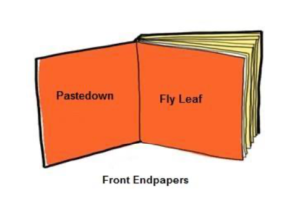
Reaching a Milestone – IVLA at Fifty Danilo M. Baylen University of West Georgia The International Visual Literacy Association, popularly known as IVLA, celebrated fifty years as an organization for visual literacy educators, scholars, and practitioners. 2018 is a milestone for IVLA members — celebrating fifty years — especially for those who are involved with the organization in its early beginnings. Almost all annual IVLA conferences produce an edited book called The Book of Selected Readings (TBSR). The publication provides opportunities to those who presented at the yearly conference independent of their involvement in the field of visual literacy. The edited book contains a collection of papers that showcases scholarly activities focusing on visual literacy research and practice. As the TBSR senior editor, I feel relieved that the edited book is now accessible online after several challenges in the editing and publication processes. I am in my second year to have the opportunity to review the works of experienced colleagues, mentor those interested in scholarly writing for this field, and collaborate with a diverse group of peers as editors and reviewers. This year’s publication received support from an editorial team of Xiaoning Chen, Ricardo Lopez- Leon, Patrick Hickey, and Sarah Christensen. All of us are very proud of this year’s collection of writings from a diverse group of authors. After multiple reviews and revisions, the editorial team accepted eleven manuscripts for publication grouped into three sections: Reading the Visual, Experiencing the Visual, and Crossing Disciplines. Dreams and Inspirations are words chosen as part of the edited book’s title to acknowledge the theme of presentations and contributions from the annual conferences in Chicago (2018), Boston (2017), and Montreal (2016). There were many presentations made at those conferences. Still, the reality of time and other commitments prevented many individuals from translating their ideas into proposals and finally into manuscripts for publication consideration. Reading and Experiencing the Visual, and Crossing Disciplines READING THE VISUAL section included three chapters with a connection to visuals in children’s picturebooks, graphic novels, and photographs. EXPERIENCING THE VISUAL part focuses on visual literacy practices in various educational settings. The final section, CROSSING DISCIPLINES, focuses on the integration and teaching of visual literacy in diverse environments and content areas (e.g., arts-based curriculum, creativity, communication, information design). Each chapter in this edited book includes different perspectives yet similar goals of improving learning, be it in a classroom, clinical setting, or in the community. It offers different strategies of teaching visual literacy to include inquiry-based, content-focused, process-oriented activities to improve the understanding of how we learn about things around us through images, visuals, illustrations, photographs, videos, or multimedia devices. READING THE VISUAL section opens with Chapter 1, Engaging with Endpapers: A Visual Literacy Experience Upon Opening a Picturebook authored by Geri Chesner. The chapter reports on a study done of the endpapers in eighty-five picturebooks published in 2016. Chesner used two endpaper typologies based on the works of Sipe and McGuire (2006) as well as Duran and Bosch (2011). She found that the theme as a story element prevailed in the books studied. Chapter 2, Using Graphic Novels to Illustrate Empathy, written by Lee Okan. She described and discussed how graphic novels could be used as teaching tools, and help students think critically about personal experiences. In analyzing graphic novels, Okan believes that “readers learn compassion through the medium.” The last chapter in this section, Discourses of Power in Historical News Photographs: Bain News Service and Representation in the Age of Imperialism, by Denitsa Yotova investigated “visual discourses of power in early twentieth-century news photography.” At the end of the chapter, the author argues that “news photographs …. promoted a sense of nationalism and exceptionalism in the age of empire.” Focusing on integrating visual literacy practices in teaching and learning contexts, the EXPERIENCING THE VISUAL section starts with Chapter 4 by Margaretha Häggström titled Visual Genealogy of Portraits, Self-Portraits, and Selfies: Same Phenomenon, Different Phases of History. She describes her examination of the genealogy of three types of portraits — portraits, self-portraits, and selfies. Using the four resources model by Freebody and Luke (1999) in her analysis of the portraits, she also discussed the concepts of visual code-breaking, visual meaning- making, visual use, and visual analysis. The ideas, mentioned earlier, supported the interpretation of her findings. The team of Pamela Wicks and Meg Bero investigated how college students learned how to create a three-dimensional artifact using a software application. In Chapter 5, Papers, Pencils, and Crayons: A Case Study in Building Visual Literacy Skills for College Students, they shared a case study that documented how theory and practice worked when using digital tools. Chapter 6, Introducing Graphic Facilitation and Recording, presents graphic facilitation (GF) and graphic recording (GR) for those interested in expanding visual literacy in the workplace. Sharlene Kennedy, the author, included in her discussions “a curated history, sample exercises and examples to illustrate the benefits of and similarities and differences between graphic facilitation and graphic recording.” She believes that reading this chapter can enhance the understanding of GF and GR, and appreciation of “its potential impact on learning, growth, and communication for individuals, groups, and organizations.” Chapter 7, Funny feeling – Introducing a Performance Art Approach towards Visual Literacy, written by Elke Mark, provides a unique perspective on connecting visual literacy and performance art. Mark describes “an experiential attempt to access the underlying complex tactile experience and the Gleichgewichtssinn (sense of balance) and translate it into a perceptible interactive experience. Given the background, the author “introduces the example of a reading practice which acknowledges bodily experience, and opens visual literacy beyond usage and design.” The last section focuses on CROSSING DISCIPLINES, where researchers and practitioners identified areas that visual literacy knowledge and skills would be useful and helpful in learning discipline-specific content or material. In Chapter 8, Constructing Arts-based Literacy Practices through Kwame Alexander’s “The Playbook”, by Anne Katz, describes the experience of using targeted reading, writing, discussion, and arts-based literacy projects with public middle school students. Also,