IVLA Book of Selected Readings 2023

2018-2019 Dreams and Inspirations

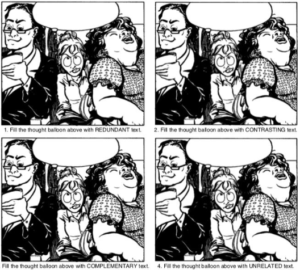
Using Graphic Novels to Illustrate Empathy

Using Graphic Novels to Illustrate Empathy Lee Okan Simmons University, USA Abstract. The graphic novel has long-served instructors as powerful teaching tools. Through graphic novels, students can pair visual images with words to examine how interdependent images and words can create a narrative. Graphic novels are essential for teaching students to think critically about personal experiences in the visual form, thereby teaching empathy. Graphic novels require visual learning to appreciate how the form addresses empathy. Graphic novels can be used to examine complex concepts. Artists can simultaneously depict stories internal and exterior conflicts of characters. This allows readers to become more empathetic to the characters. The visual form, as well as the accompanying narrative, provides an intimate medium to engross readers in parallel experiences. As educators struggle to engage students, the accessibility of graphic novels and their visually-rich narratives teach students both literacy and visual literacy. Through the images and the texts, students make connections and develop compassion for characters’ experiences. It is the connection of text and image interplay that conveys a greater sense of empathy with readers. This book chapter will analyze creators’ works in how readers learn compassion through the medium. Keywords: Graphic novels, visual literacy, empathy, immigration, intercultural teaching and learning Read the full text.

Read More »
2018-2019 Dreams and Inspirations

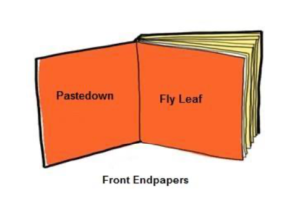
Engaging with Endpapers: A Visual Literacy Experience Upon Opening a Picturebook

Engaging with Endpapers: A Visual Literacy Experience Upon Opening a Picturebook Geri Chesner National Louis University, USA Abstract. Picturebooks are sophisticated forms of visual design that offer much to delight and inform readers of all ages, not just within the pages of the story, but in the design of the books’ peritextual elements. Picturebooks contain highly illustrated elements of art and design that can support the understanding of visuals and narrative. Those developed for young people are an indispensable tool for developing and extending visual literacy skills when emphasizing their visual elements and structural design (Stewig, 1986). Endpapers, an integral peritextual element are often illustrated and provide good sources of information for visual interpretation. In recent years, well developed and cleverly utilized endpapers in picturebooks have provided a growing opportunity for readers and viewers to understand and engage with the meaning of the visuals and narrative intended by the artists who create them. This research details a study done of the endpapers in eighty-five picturebooks published in 2016 in relation to two endpaper typologies, that of Sipe and McGuire (2006) and Duran and Bosch (2011). It was evidenced that of all the story elements reflected, theme was the most prevalent in the books studied. Keywords: Comprehension, endpapers, picturebooks, visual interpretation, visuals Read the full text.

Read More »
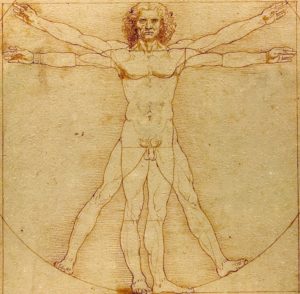
vetruvian man and visual literacy
2014-2015 The Art of Seeing

The Role of Visual Literacy in the Birth of Observational Science

Deborah Curtiss Abstract: De Humani Corporis Fabrica, a seven-volume opus by Andreas Vesalius, published in 1543, is possibly the most elegant synthesis of science and visual art in the history of humankind. Today, the frontiers of discovery in the 21st century reside in the minutiae of the human brain and the magnitude of the cosmos. Similarly, vision and visual literacy played an essential and inestimable role in the development and revelations of observational science in the Renaissance when some inquisitive individuals of the 1500s, notably Leonardo and Vesalius, delved into the constructs of human and animal anatomy. And others—such as Copernicus, Tycho Brahe, and Galileo—looked to the heavens to reveal its mysteries. A brief history of these developments is followed by a creative exposition of their influences upon me as a visual artist. Read the full paper here.

Read More »
IVLA Book of Selected Readings 2023

Submission Guidelines: IVLA Book of Selected Readings

Submissions are currently closed as we have just published our 2021 issue of the Book of Selected Readings. Please check back soon for submission information for the 2022 issue.  The Book of Selected Readings (TBSR) is a peer-reviewed, annual IVLA publication selected primarily from papers based on the annual conference presentations. The publication has served as an important reference point for current research and issues concerning visual literacy. Besides providing seasoned scholars with an outlet for their work, one of the goals of this volume is to enable new scholars to publish their studies. TBSR is inclusive and serves as a place for scholars to publish their research, promote their work, and connect with their audience. Criteria for Selection All presenters at the annual IVLA conference are invited to submit a proposal (approximately 500-1,000 words excluding references)  for article/book chapter consideration. The editorial team will select those proposals they deem appropriate and relevant for the publication. In order for manuscripts to be considered they must be: Based on presentations from recent IVLA annual conferences. Narrative includes a definition of visual literacy based on the current literature. Submitted manuscript is supported by appropriate images, illustrations or photographs. Writing should follow the APA style format. Editorial Process Every proposal submitted will be read by at least three reviewers: external reviewer(s) and editor(s). (Proposal Submission) Every manuscript submitted for publication consideration will be reviewed by at least two editors. (Full Manuscript Submission) The editorial team will recommend to either publish the manuscript as submitted, publish the manuscript with suggested revisions, or mentor the manuscript for future publication. In all cases the author will be notified of the decision, and receive the editors’ comments. Accepted manuscripts for publication will be copyedited by at least one editor. Guidelines for Proposal Submission Please read this document carefully before submitting your paper. Proposals that do not follow these guidelines will not be considered. 1. Please submit one digital copy of your proposal that includes the title of the work (preferably not exceeding 40 letters and spaces) followed by an abstract of 500-1,000 words and a list of 4 or 5 keywords or brief phrases. This copy must have all author information removed. 2. A separate file with the title of the work (preferably not exceeding 40 letters and spaces) names and contact information for all authors (include name, highest degree, mailing address, phone, e-mail, and institutional affiliation as appropriate). Formatting Follow APA style All submissions must be a Microsoft Word .doc or .docx file. Submitted proposals are deemed final as initial submission. Please ensure your proposal has been edited/proofread and is ready for review. The proposal should be double-spaced and has a page number as footer. Indicate headings and subheadings for different sections of the proposal clearly. Do not number headings. Styles OP Body text: Arial, 12pt, 6pt paragraph spacing Author name: Arial, Bold, Italic, 12pt Keywords: Arial, 12pt Figure titles, legends and captions: Arial, 11pt Block quotations: Arial, 12pt, italic, indented 10mm from left margin Headings: Follow APA style Awards Each year, outstanding TBSR submissions are considered for two important awards. These are: Editors’ Choice Award — This award is given to the paper the editor/s consider the best work of all of the contributed papers. The Editors’ Choice Award paper is distinguished from the other papers in the book with a distinctive corner marking in the publication. The editors determine this award. Braden/Beauchamp Visual Literacy Award — This award, named for two previous editors of the Selected Readings, seeks to honor the paper that best helps contribute to the definition of the study of visual literacy. This award is given only in years where sufficient contributions have been made to the Selected Readings in this area. The editors also determine this award. Submission Submissions are currently closed. Please check back soon for submission information for the 2022 issue.
Read More »
2014-2015 The Art of Seeing

Visual Poetics in New Media Design

Professor Patricia Search   Abstract: Visual poetics in new media design is a dynamic form of communication that integrates diverse media into poetic statements that form a new type of hybrid literacy. Early examples of visual poetics include petroglyphs and other forms of pictorial writing, as well as the pattern poems of Greek poets and Apollinaire. However, contemporary visual poetics now includes works of art and design that are three-dimensional, multimedia, and interactive. This paper includes an historical overview of visual poetry and contemporary new media poetics. The paper also includes an analysis of the complex syntax of this new literacy which includes multimodal semiotics, kinesthetic design, and interactive aesthetics. Examples of art and design ranging from indigenous to contemporary works are included to illustrate these concepts. Understanding the semiotic structure of this complex form of visual literacy will help researchers, educators, artists, designers, and other professional communicators define new ways to use these hybrid designs. Keywords: interactive aesthetics, kinesthetic design, multimodal semiotics, visual poetry Read the full paper here.

Read More »
2014-2015 The Art of Seeing

Learning to Look Across Disciplines: Visual Literacy for Museum Audiences

Kate Blake   Abstract: Since 2011, teaching visual literacy has been one of the strategic objectives of the Toledo Museum of Art (TMA), site of the 2014 International Visual Literacy Conference. In an effort to realize this objective, the museum established an institutional definition and framework for Visual literacy, created a twelve-hour introductory curriculum, and implemented it across the museum. This paper will give an overview of the visual literacy definition and framework employed by TMA, describe the pedagogical approach utilized by TMA educators and docents, and examine implementation of the curriculum through case studies of four of the museums core audiences: schools and teachers; general museum visitors; private sector partners; and museum staff, docents and volunteers. The case studies examined will focus on adaptation strategies employed to meet the unique needs of these distinct audiences. The article will also address ongoing evaluation efforts. Keywords: curriculum development, visual literacy framework, pedagogy, museum audiences, Visual Language Read the full paper here.  

Read More »
2014-2015 The Art of Seeing

Welcome to the IVLA Book of Selected Readings 2014-15

Contents The Art of Seeing 1. The Role of Visual Literacy in the Birth of Observational Science Deborah Curtiss 2. Visual Poetics in New Media Design Professor Patricia Search 3. Learning to Look Across Disciplines: Visual Literacy for Museum Audiences Kate Blake 4. Whose Streets? Our Streets! Art Integration from Museum to Barrio Rhonda Robinson 5. From Print to Digital Picture Books: The Impact of Technology on Multimodal Design Xiaoning Chen 6. Graph Construction and Interpretation Ability Frank A. Cerrato, Jung Lee & Wondi Geremew 7. Integrating Visual Literacy Skills into PK-12 Education Teresa Farrell 8. Proposal for Research Presentation Poster Design Workshop by Junichi Endo 9. The Dialogical Model for Reading Contemporary Art Rachel Shalita Hamidrasha 10. Visually Documenting Consumer Health Research Using PhotoVoice Naomi Jeffery & Rebecca L. Pearson

Read More »
2014-2015 The Art of Seeing

Whose Streets? Our Streets! Art Integration from Museum to Barrio

Rhonda Robinson   Abstract: Educators from four museums collaborated with artists, scholars, educators, and activists to craft socially engaged teacher Professional Development. Activities and resources encouraged the integration of history, culture, and identity through art into the classroom experiences of Chicago students. Museum Educators introduced a variety of visual literacy and critical viewing frameworks, shared a wide variety of artworks and community art projects, provided links to curricular redesign, and explored active engagement of teachers in this themed learning experience. Teachers engaged in arts creation and analysis created a sense of community for themselves and their students, and developed skills in arts integration into their classroom activities. In addition, teachers felt empowered to introduce social justice issues around the idea of space and community and integrated these into classroom projects with their students. Keywords: arts integration, social/spatial justice, intersectionality critique exchange, visual literacy, professional development Read the full paper here.  

Read More »
2018-2019 Dreams and Inspirations

Welcome to the IVLA Book of Selected Readings 2018-2019

Contents Introduction Reaching a Milestone: IVLA at 50 Danilo M. Baylen Reading the Visual 1. Engaging with Endpapers: A Visual Literacy Experience Upon Opening a Picturebook   Geri Chesner  2. Using Graphic Novels to Illustrate Empathy Lee Okan 3. Discourses of Power in Historical News Photographs: Bain News Service and Representation in the Age of Imperialism Denitsa Yotova Experiencing the Visual 4. Visual Genealogy of Portraits, Self-Portraits, and Selfies: Same Phenomenon, Different Phase of History         Margaretha Häggström 5. Papers, Pencils, and Crayons: A Case Study in Building Visual Literacy Skills for College Students Pamela Wicks and Meg Bero 6. Introducing Graphic Facilitation and Recording Sharlene Kennedy 7. Funny Feeling – Introducing a Performance Art Approach to Visual Literacy Elke Mark Crossing Disciplines 8. Constructing Arts-based Literacy Practices through Kwame Alexander’s “The Playbook” Anne Katz 9. Surveying Visual Literacy Guidelines for Information Design Application Randy Howe 10. Design: Changing Zeitgeist, Changing Communication Phillip Gallagher 11. Creativity and the Development of New Ideas: the Generative Potential of Visual Literacy.                                 Brad Hokanson

Read More »
2017-2018 Senses and Experiences

Welcome to the IVLA Book of Selected Readings 2017-2018

Contents Introduction Crossing Disciplinary Boundaries Using Senses and Experiences: An Introduction Danilo M. Baylen Senses 1. Emoji Literacies: Read & Write, Translate, Montage  Editors’ Choice Award Ernesto Leon De La Rosa-Carillo  2. Twentieth Century Virtual Reality Education Reprise: Stereographs to Google Cardboard Veronica I. Ent 3. Creating Connections: Teens, Art, and Engagement Isabelle Guillard Experiences 4. Cultivating Visual Literacy among Preschool through Middle School Students: Strategies and Applications Anne Katz 5. Teachers’ Visual Literacy Practices in Middle and High School Science Classrooms Xiaoning Chen, Mark Newman, & Vito M. DiPinto 6. Applying Visual Literacy to Pedagogy in Secondary Curriculum Design Teresa A. Farrell Crossing Disciplines 7. Evaluating Visuals: Increasing Visual Literacy with Infographics Dana Statton Thompson, Melony Shemberger, & Leigh Landini Wright 8. Aesthetic Empathy and Art-based Learning: Pedagogical Scaffolding in Art Therapy Education Denise Malis 9. Reading the Landscape Carl Rogers & Chad Hunter 10. Visual Awareness and Other Consequences of Promoting Visual Literacy through Photography Ricardo Lopez-Leon

Read More »