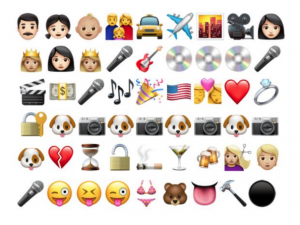
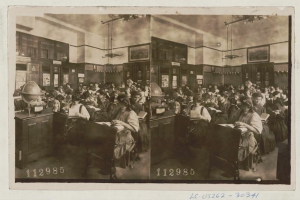
Crossing Disciplinary Boundaries Using Senses and Experiences: An Introduction Danilo M. Baylen University of West Georgia A book, edited or not, is never finished. But at a certain point, the writer has to put the pen down or turn off the laptop to end the work that has been a big part of his daily activities for almost a year. As I put the finishing touches to this book of selected readings — a collection of writings on visual literacy based on conference presentations and responses to invitation — I believe that this body of work contributes to more scholarly activities and engagement in visual literacy research and practice. As the senior editor, I feel relieved and exhilarated at the same time now that the work is done. Relieved that finally the book can be released for online public access, and I do not have to stay until almost midnight for weeks at my office, have decent meals, and more hours to sleep. Exhilarated by the experience of serving in a position that provided opportunities to review the works of experienced colleagues, mentor those interested in scholarly writing for this field, and collaborate with a diverse group of peers as editors and reviewers. The Book of Selected Readings (TBSR) is not my first editorial experience. I completed another edited book three years ago. But there are still lots of lessons to be learned from dealing with authors and reviewers to managing a team of assistant editors. However, I believe that the previous experience encouraged me to embrace the challenge of working again on another edited text. Definitely, I felt that the years of serving as a reviewer, editorial team member, associate and lead editor has prepared me for this role. It is an honor to work with the next generation of visual literacy scholars in producing the annual book of selected readings for the International Visual Literacy Association (IVLA). TBSR has almost a fifty year history. For more years than I can remember, the book of selected readings is the venue for the writings of those who presented at the annual conference. However, not all presenters submit a manuscript at the end of each conference, and this made my predecessors decide to welcome submissions outside of the annual conference that contribute to the emerging scholarship relevant to visual literacy. As the current editor-in-chief, I am still trying to find a balance in dealing with this challenge. I feel confident with this year’s editorial team of Xiaoning Chen, Ricardo Lopez-Leon, Patrick Hickey, and Tinatin (Tiki) Baghashvili. All of us are very proud of this year’s collection of writings from a diverse group of authors. After multiple reviews and revisions, we as editors accepted ten manuscripts for publication that were grouped into three sections: Senses, Experiences, and Crossing Disciplines in the edited book. Senses and Experiences are words we chose as part of the edited book’s title to acknowledge the theme of presentations and contributions from the annual conferences in Montreal (2016) and Boston (2017). There were many presentations made in those conferences but the reality of time and other commitments prevented many individuals from translating their ideas into proposals and finally into manuscripts for publication consideration. Given this challenge, as editor-in-chief, I advocated for more support to would-be authors to write, revise and complete their manuscripts. We created a review process involving two levels of feedback in improving content, scholarship, and impact of one’s writing. Instead of rejection, we provided opportunities for revision as long as the author/writer is willing to meet the expectation set by the editorial team. At the end, time became everyone’s big hurdle to complete and some manuscripts were recommended for more mentoring and publication consideration in the next year’s volume. Senses, Experiences, and Crossing Disciplines Ten chapters are included in this edited book and categorized into three sections. The first section on SENSES included three chapters with connection to digital symbols, tools, and applications. The second section on EXPERIENCES focuses on visual literacy practices in various school settings. The last section on CROSSING DISCIPLINES focuses on the integration and teaching of visual literacy in diverse settings and content areas (journalism, art therapy, architecture, and graphic design). Each chapter in this edited book includes different perspectives yet similar goals of improving learning be it in a classroom, clinical setting, or outdoors in the community. It offers different strategies of teaching visual literacy to include inquiry-based, content-focused, process-oriented activities to improve the understanding of how we learn about things around us through images, visuals, illustrations, photographs, videos, or multimedia devices. The SENSES section opens with Chapter 1, Emoji Literacies: Read & Write, Translate, Montage authored by Ernesto Leon De La Rosa-Carillo. He explored emojis as “a particular brand of digital visual literacy through three distinct lesson plans. The instructional activities from different contexts focused on the expressive potential of colorful pictographs. The emoji lessons trace a map that is not meant to quantify and exhaust emoji use in everyday conventional communication but to expand emoji literacy beyond the reaches of the written word and render it capable of fashioning its own poetic, creative and expressive dimensions that can only be fully interrogated within the art classroom. De La Rosa-Carillo’s writing was selected as this year’s editors’ choice award. Chapter 2, Twentieth Century Virtual Reality Education Reprise: Stereographs to Google Cardboard written by Veronica I. Ent described and discussed the historical context of virtual reality in the classroom. She wrote about the stereoscope in early 1900s, and then identified parallelism with the use of smartphone as virtual reality devices in the classroom similar to the Google Cardboard. In Chapter 3, Creating Connections: Teens, Art, and Engagement, Isabelle Guillard explores in her writing how contemporary artists can play in student learning in secondary school art education. She discussed the idea of having artists come to the classroom as a highly motivating educational strategy. She wrote about teens’ interests and how her strategy pushes the boundaries of traditional teaching methodology to