IVLA Book of Selected Readings 2023

2017-2018 Senses and Experiences

Creating Connection: Teens, Art, and Engagement

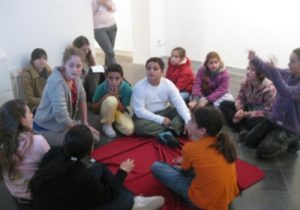
Isabelle Guillard Concordia University, Canada Abstract. This chapter explores the role that contemporary artists can play in student learning in secondary school art education. Partnerships, combining visual and media literacy approaches in pedagogy, tend to develop essential skillsets that reflect current academic aims related to democratic and responsible citizenship. Collaborative projects between practicing artists, students, and educators yield critical, outside-of-the-box thinking and communication, social engagement, and innovative uses of information and communications technology (ICT). Such partnerships also initiate students into working holistically and collaboratively across school subjects and disciplines. The narrative describes the collaboration between a high school teacher and contemporary artists, Manuel Chantre and Elisabeth Picard, through the Quebec Ministry of Education program called the “Culture in the Schools.” Transcripts from interviews of Chantre, Picard and another contemporary artist, Brandon Ballengée, illustrates how the presence of artists in the classrooms can be a highly motivating educational strategy. The experience speaks to teens’ interests and pushes the boundaries of traditional teaching methodology to incorporate, both theoretically and in practice, critical notions of identity, belonging, dialogue, and community. Keywords: high school art education, contemporary art, citizenship, interdisciplinarity, information and communications technology. Read the full paper here.

Read More »
2014-2015 The Art of Seeing

From Print to Digital Picture Books: The Impact of Technology on Multimodal Design

Xiaoning Chen   Abstract: From the socio-semiotic perspective, this paper intends to examine the impact of technology on multimodal design of digital picture books. The study analyzes 26 digital picture books completed by pre-service teachers in a Literacy Methods course, and identifies three key categories, which are static multimodal semiotic resources, dynamic multimodal semiotic resources, and usability features, that reshape the elements of written language, visual image, design, and the overall reading experience of digital books. This study has research and pedagogical implications. The results of the study contribute to the limited understanding of how digital texts emerge as a new form of visual literacy and how technology has a significant impact on the multimodal design and meaning making process. The study also appeals to educators as it has a close connection to the Common Core State Standards (2011), which places a strong emphasis on students’ abilities to recognize, interpret, and evaluate the information represented through diverse media and formats. Effective literacy strategies to support children’s interpretations of multimodal digital texts are discussed to support the construction of a dynamic and active reader’s role in navigating “new textual landscapes” (Carrington, 2005). Read the full paper here.

Read More »
2014-2015 The Art of Seeing

Graph Construction and Interpretation Ability

Frank A. Cerreto, Jung Lee, and Wondi Geremew   Abstract: The purpose of this study was to investigate what, if any relationship exists between graph construction ability and interpretation ability. Sixty-seven college students completed two graphing tasks, one involving construction and the other interpretation of graphs, both based on actual data. Statistical analysis of the scores showed no significant correlation between total scores on the two tasks and no significant relationships between specific components of graph construction ability and graph interpretation ability. These results suggest that the two abilities are distinct from one another. The study’s findings add to our understanding of graph construction ability and have practical implications for teaching and learning. Keywords: graph construction, graph interpretation, graphing data, graphical literacy Read the full paper here.

Read More »
2017-2018 Senses and Experiences

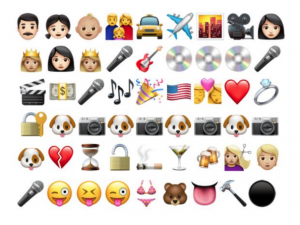
Emoji Literacies: Read & Write, Translate, Montage

Ernesto Leon De La Rosa-Carillo Universidad Autónoma de Ciudad Juárez, Mexico Abstract. Emoji literacy is explored as a particular brand of digital visual literacy through three distinct lesson plans developed within different contexts that focus on the expressive potential of these colorful pictographs. Largely unconcerned with the concrete communication afforded by alphabetical char-acters, each exploration revels on the ambiguity of emoji phrases that refuse to be simply read and demand to be interpreted, perhaps even translated into intellectual experiences that might deviate from the affective dimensions traditionally associated with them. The first lesson plan was specifically designed to take advantage of emoji possibilities as storytelling devices with 6 and 7-year-olds, whose reading and writing skills might still be developing. The second case was developed with young slam poets to explore the expressive limits of pictographs meant to instantly convey “thoughts or emotions without inspiring strong likes or dislikes” (Nageshi, 2014). Finally, a group of visual arts undergrads participated in the third emoji plan, which expanded on Eisenstein’s Montage Theory as discussed in his seminal 1929 essay, The cinematographic principle and the ideogram. Together, these three emoji lessons trace a map that is not meant to quantify and exhaust emoji use in everyday conventional communication but to expand emoji literacy beyond the reaches of the written word and render it capable of fashioning its own poetic, creative and expressive dimensions that can only be fully inter-rogated within the art classroom. Keywords: Emoji literacy, art education, internet culture, digital visual literacy Read the full paper here.

Read More »
2014-2015 The Art of Seeing

Integrating Visual Literacy Skills into PK-12 Education

Teresa Farrell Abstract: First person encounters with educational issues can often lead to reform, and Eastern Oregon University assistant professor, Teresa A. Farrell describes how her personal experience with Visual Literacy is the driving force behind her ongoing action research in the field. As a faculty member in a graduate level teacher preparation program, she has an opportunity to study various methodologies in order to better determine how to promote and increase Visual Literacy skills. A particular focus is on Visual Literacy and its relevancy to PK-12 education in regard to critical thinking, the Common Core State Standards (CCSS), and communication. In this paper, primary research in practice and measurement is shown as a basis for teacher preparation and professional development. The paper includes specific suggestions for PK-12 activities aligned with CCSS. Read the full paper here.

Read More »
2017-2018 Senses and Experiences

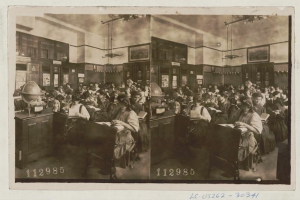
Twentieth Century Virtual Reality Education Reprise: Stereographs to Google Cardboard

Veronica I. Ent Saint Vincent College, USA Abstract. Could today’s teachers use methods from over 100 years ago in their classrooms with smartphone virtual reality? This article examines the historical context of virtual reality in the classroom as early as the 1900s beginning with the stereoscope and then looks to the future with the use of smartphone virtual reality devices in the classroom similar to the Google Cardboard. In addition to this historical overview, new teachers, unfamiliar with the early stereograph use in the classroom, were asked to develop virtual reality strategies using a Google Cardboard device. In a surprising twist, the teacher-developed methods were nearly interchangeable between the 1900s and today! Keywords: stereograph, virtual reality, visual education, Google cardboard, teaching with technology, stereo views in education; VR headsets, SAMR model. Read the full paper here.

Read More »
2014-2015 The Art of Seeing

Proposal for Research Presentation Poster Design Workshop

Junichi Endo Abstract: Since 2009, we have been teaching graduate students the design basics needed to create research presentation materials such as slides and posters. The course aims to provide students with the ability to create posters for presentations at academic conferences. We focused on research materials because the need to make research presentations at academic conferences increases as Japanese students reach the graduate level. Clarity and visibility are more important than the visual impact when designing research materials. For business presentations and advertising, there is a need for high-quality visually stimulating slides, such as large photos, flashy illustrations, and animation. However, academic materials require clear design and easy-to-read content. We proposed an additional workshop in which students could acquire poster design skills. In this workshop, students were able to get feedback on how others saw their own layouts from a “third person perspective” and learnt how to achieve the sense of balance necessary for effective poster design. It became apparent that the students needed to more thoroughly understand the concepts of design and not just learn a set of rules. The workshop had very positive effects on subsequent poster designs. The students were able to identify the incomprehensible aspects of their own poster design in the workshop. This understanding has enabled them to work independently and improve their own poster designs when preparing their own research posters. Keywords: design, workshop, research poster, higher education Read the full paper here.

Read More »
Headshot of Danilo M. Baylen, Professor of IT, Media & Design at University of West Georgia.
2018-2019 Dreams and Inspirations

Editor’s Note: Selected Readings 2018

Reaching a Milestone – IVLA at Fifty Danilo M. Baylen University of West Georgia The International Visual Literacy Association, popularly known as IVLA, celebrated fifty years as an organization for visual literacy educators, scholars, and practitioners. 2018 is a milestone for IVLA members — celebrating fifty years — especially for those who are involved with the organization in its early beginnings. Almost all annual IVLA conferences produce an edited book called The Book of Selected Readings (TBSR). The publication provides opportunities to those who presented at the yearly conference independent of their involvement in the field of visual literacy. The edited book contains a collection of papers that showcases scholarly activities focusing on visual literacy research and practice. As the TBSR senior editor, I feel relieved that the edited book is now accessible online after several challenges in the editing and publication processes. I am in my second year to have the opportunity to review the works of experienced colleagues, mentor those interested in scholarly writing for this field, and collaborate with a diverse group of peers as editors and reviewers. This year’s publication received support from an editorial team of Xiaoning Chen, Ricardo Lopez- Leon, Patrick Hickey, and Sarah Christensen. All of us are very proud of this year’s collection of writings from a diverse group of authors. After multiple reviews and revisions, the editorial team accepted eleven manuscripts for publication grouped into three sections: Reading the Visual, Experiencing the Visual, and Crossing Disciplines. Dreams and Inspirations are words chosen as part of the edited book’s title to acknowledge the theme of presentations and contributions from the annual conferences in Chicago (2018), Boston (2017), and Montreal (2016). There were many presentations made at those conferences. Still, the reality of time and other commitments prevented many individuals from translating their ideas into proposals and finally into manuscripts for publication consideration. Reading and Experiencing the Visual, and Crossing Disciplines READING THE VISUAL section included three chapters with a connection to visuals in children’s picturebooks, graphic novels, and photographs. EXPERIENCING THE VISUAL part focuses on visual literacy practices in various educational settings. The final section, CROSSING DISCIPLINES, focuses on the integration and teaching of visual literacy in diverse environments and content areas (e.g., arts-based curriculum, creativity, communication, information design). Each chapter in this edited book includes different perspectives yet similar goals of improving learning, be it in a classroom, clinical setting, or in the community. It offers different strategies of teaching visual literacy to include inquiry-based, content-focused, process-oriented activities to improve the understanding of how we learn about things around us through images, visuals, illustrations, photographs, videos, or multimedia devices. READING THE VISUAL section opens with Chapter 1, Engaging with Endpapers: A Visual Literacy Experience Upon Opening a Picturebook authored by Geri Chesner. The chapter reports on a study done of the endpapers in eighty-five picturebooks published in 2016. Chesner used two endpaper typologies based on the works of Sipe and McGuire (2006) as well as Duran and Bosch (2011). She found that the theme as a story element prevailed in the books studied. Chapter 2, Using Graphic Novels to Illustrate Empathy, written by Lee Okan. She described and discussed how graphic novels could be used as teaching tools, and help students think critically about personal experiences. In analyzing graphic novels, Okan believes that “readers learn compassion through the medium.” The last chapter in this section, Discourses of Power in Historical News Photographs: Bain News Service and Representation in the Age of Imperialism, by Denitsa Yotova investigated “visual discourses of power in early twentieth-century news photography.” At the end of the chapter, the author argues that “news photographs …. promoted a sense of nationalism and exceptionalism in the age of empire.” Focusing on integrating visual literacy practices in teaching and learning contexts, the EXPERIENCING THE VISUAL section starts with Chapter 4 by Margaretha Häggström titled Visual Genealogy of Portraits, Self-Portraits, and Selfies: Same Phenomenon, Different Phases of History. She describes her examination of the genealogy of three types of portraits — portraits, self-portraits, and selfies. Using the four resources model by Freebody and Luke (1999) in her analysis of the portraits, she also discussed the concepts of visual code-breaking, visual meaning- making, visual use, and visual analysis. The ideas, mentioned earlier, supported the interpretation of her findings. The team of Pamela Wicks and Meg Bero investigated how college students learned how to create a three-dimensional artifact using a software application. In Chapter 5, Papers, Pencils, and Crayons: A Case Study in Building Visual Literacy Skills for College Students, they shared a case study that documented how theory and practice worked when using digital tools. Chapter 6, Introducing Graphic Facilitation and Recording, presents graphic facilitation (GF) and graphic recording (GR) for those interested in expanding visual literacy in the workplace. Sharlene Kennedy, the author, included in her discussions “a curated history, sample exercises and examples to illustrate the benefits of and similarities and differences between graphic facilitation and graphic recording.” She believes that reading this chapter can enhance the understanding of GF and GR, and appreciation of “its potential impact on learning, growth, and communication for individuals, groups, and organizations.” Chapter 7, Funny feeling – Introducing a Performance Art Approach towards Visual Literacy, written by Elke Mark, provides a unique perspective on connecting visual literacy and performance art. Mark describes “an experiential attempt to access the underlying complex tactile experience and the Gleichgewichtssinn (sense of balance) and translate it into a perceptible interactive experience. Given the background, the author “introduces the example of a reading practice which acknowledges bodily experience, and opens visual literacy beyond usage and design.” The last section focuses on CROSSING DISCIPLINES, where researchers and practitioners identified areas that visual literacy knowledge and skills would be useful and helpful in learning discipline-specific content or material. In Chapter 8, Constructing Arts-based Literacy Practices through Kwame Alexander’s “The Playbook”, by Anne Katz, describes the experience of using targeted reading, writing, discussion, and arts-based literacy projects with public middle school students. Also,
Read More »
Headshot of Danilo M. Baylen, Professor of IT, Media & Design at University of West Georgia.
2017-2018 Senses and Experiences

Editor’s Note: Selected Readings 2017-2018

Crossing Disciplinary Boundaries Using Senses and Experiences: An Introduction Danilo M. Baylen University of West Georgia A book, edited or not, is never finished. But at a certain point, the writer has to put the pen down or turn off the laptop to end the work that has been a big part of his daily activities for almost a year. As I put the finishing touches to this book of selected readings — a collection of writings on visual literacy based on conference presentations and responses to invitation — I believe that this body of work contributes to more scholarly activities and engagement in visual literacy research and practice. As the senior editor, I feel relieved and exhilarated at the same time now that the work is done. Relieved that finally the book can be released for online public access, and I do not have to stay until almost midnight for weeks at my office, have decent meals, and more hours to sleep. Exhilarated by the experience of serving in a position that provided opportunities to review the works of experienced colleagues, mentor those interested in scholarly writing for this field, and collaborate with a diverse group of peers as editors and reviewers. The Book of Selected Readings (TBSR) is not my first editorial experience. I completed another edited book three years ago. But there are still lots of lessons to be learned from dealing with authors and reviewers to managing a team of assistant editors. However, I believe that the previous experience encouraged me to embrace the challenge of working again on another edited text. Definitely, I felt that the years of serving as a reviewer, editorial team member, associate and lead editor has prepared me for this role. It is an honor to work with the next generation of visual literacy scholars in producing the annual book of selected readings for the International Visual Literacy Association (IVLA). TBSR has almost a fifty year history. For more years than I can remember, the book of selected readings is the venue for the writings of those who presented at the annual conference. However, not all presenters submit a manuscript at the end of each conference, and this made my predecessors decide to welcome submissions outside of the annual conference that contribute to the emerging scholarship relevant to visual literacy. As the current editor-in-chief, I am still trying to find a balance in dealing with this challenge. I feel confident with this year’s editorial team of Xiaoning Chen, Ricardo Lopez-Leon, Patrick Hickey, and Tinatin (Tiki) Baghashvili. All of us are very proud of this year’s collection of writings from a diverse group of authors. After multiple reviews and revisions, we as editors accepted ten manuscripts for publication that were grouped into three sections: Senses, Experiences, and Crossing Disciplines in the edited book. Senses and Experiences are words we chose as part of the edited book’s title to acknowledge the theme of presentations and contributions from the annual conferences in Montreal (2016) and Boston (2017). There were many presentations made in those conferences but the reality of time and other commitments prevented many individuals from translating their ideas into proposals and finally into manuscripts for publication consideration. Given this challenge, as editor-in-chief, I advocated for more support to would-be authors to write, revise and complete their manuscripts. We created a review process involving two levels of feedback in improving content, scholarship, and impact of one’s writing. Instead of rejection, we provided opportunities for revision as long as the author/writer is willing to meet the expectation set by the editorial team. At the end, time became everyone’s big hurdle to complete and some manuscripts were recommended for more mentoring and publication consideration in the next year’s volume. Senses, Experiences, and Crossing Disciplines Ten chapters are included in this edited book and categorized into three sections. The first section on SENSES included three chapters with connection to digital symbols, tools, and applications. The second section on EXPERIENCES focuses on visual literacy practices in various school settings. The last section on CROSSING DISCIPLINES focuses on the integration and teaching of visual literacy in diverse settings and content areas (journalism, art therapy, architecture, and graphic design). Each chapter in this edited book includes different perspectives yet similar goals of improving learning be it in a classroom, clinical setting, or outdoors in the community. It offers different strategies of teaching visual literacy to include inquiry-based, content-focused, process-oriented activities to improve the understanding of how we learn about things around us through images, visuals, illustrations, photographs, videos, or multimedia devices. The SENSES section opens with Chapter 1, Emoji Literacies: Read & Write, Translate, Montage authored by Ernesto Leon De La Rosa-Carillo. He explored emojis as “a particular brand of digital visual literacy through three distinct lesson plans. The instructional activities from different contexts focused on the expressive potential of colorful pictographs. The emoji lessons trace a map that is not meant to quantify and exhaust emoji use in everyday conventional communication but to expand emoji literacy beyond the reaches of the written word and render it capable of fashioning its own poetic, creative and expressive dimensions that can only be fully interrogated within the art classroom. De La Rosa-Carillo’s writing was selected as this year’s editors’ choice award. Chapter 2, Twentieth Century Virtual Reality Education Reprise: Stereographs to Google Cardboard written by Veronica I. Ent described and discussed the historical context of virtual reality in the classroom.  She wrote about the stereoscope in early 1900s, and then identified parallelism with the use of smartphone as virtual reality devices in the classroom similar to the Google Cardboard. In Chapter 3, Creating Connections: Teens, Art, and Engagement, Isabelle Guillard explores in her writing how contemporary artists can play in student learning in secondary school art education. She discussed the idea of having artists come to the classroom as a highly motivating educational strategy. She wrote about teens’ interests and how her strategy pushes the boundaries of traditional teaching methodology to

Read More »
2014-2015 The Art of Seeing

The Dialogical Model for Reading Contemporary Art

Rachel Shalita Hamidrasha Art and Education Faculty, Beit-Berl College, Israel Abstract: The “Dialogical Model” for reading contemporary art has many antecedents. It can be found in the thought and writings of Plato who, in 5th B.C.E. Athens, described the centrality of the dialogical form as “Socratic dialogue,” employed as an educational tool by his teacher Socrates. Centuries later, Martin Buber’s canonical book I and Thou (1923), enormously influenced pedagogical worth of dialogue, and Carl Rogers in his best known contribution to humanistic psychology and the facilitation of learning, speaks of congruence, acceptance and empathy — three main tenets for dialogue. Read the full paper here.

Read More »